read the claim and the supporting evidence. claim: messiness may actually be productive. evidence: one study…
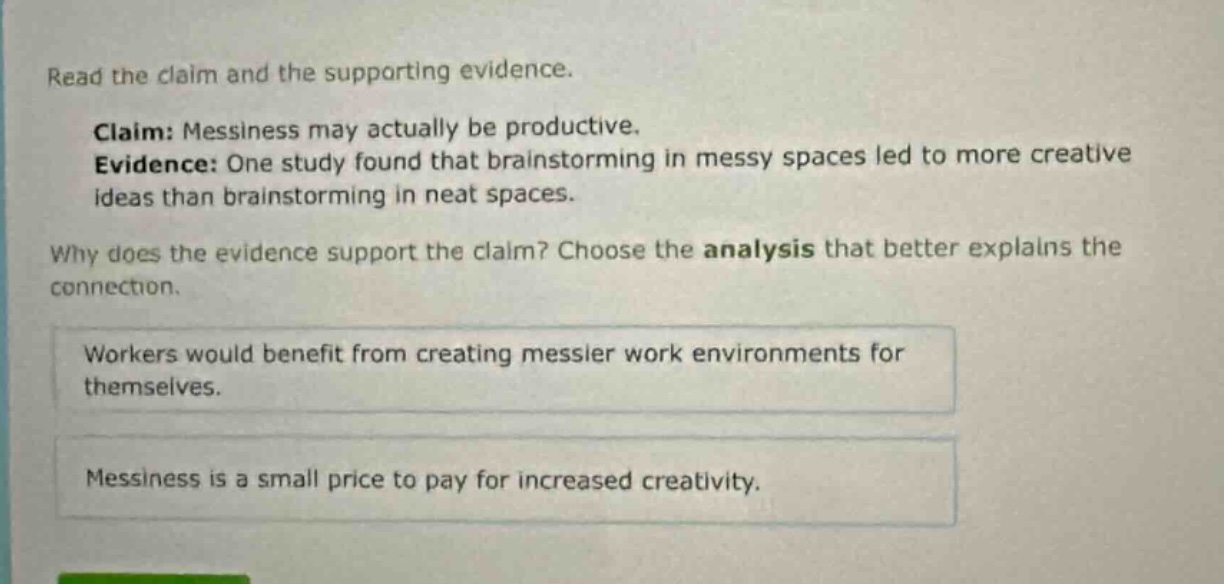
read the claim and the supporting evidence. claim: messiness may actually be productive. evidence: one study found that brainstorming in messy spaces led to more creative ideas than brainstorming in neat spaces. why does the evidence support the claim? choose the analysis that better explains the connection. workers would benefit from creating messier work environments for themselves. messiness is a small price to pay for increased creativity.
Answer
Brief Explanations:
The claim is about messiness being productive. The evidence is that messy spaces lead to more creative ideas. The second analysis directly links messiness to increased creativity, which is a form of productivity. The first analysis is more about workers' actions rather than directly explaining the link between messiness and productivity.
Answer:
Messiness is a small price to pay for increased creativity.