read this excerpt from \heads up on sports safety.\ the dangers to your head depend on the sport, but some…
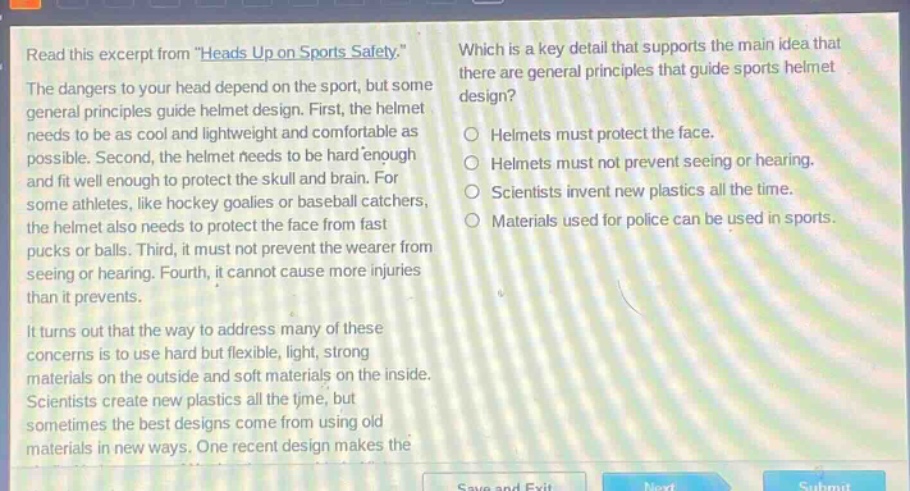
read this excerpt from \heads up on sports safety.\ the dangers to your head depend on the sport, but some general principles guide helmet design. first, the helmet needs to be as cool and lightweight and comfortable as possible. second, the helmet needs to be hard enough and fit well enough to protect the skull and brain. for some athletes, like hockey goalies or baseball catchers, the helmet also needs to protect the face from fast pucks or balls. third, it must not prevent the wearer from seeing or hearing. fourth, it cannot cause more injuries than it prevents. it turns out that the way to address many of these concerns is to use hard but flexible, light, strong materials on the outside and soft materials on the inside. scientists create new plastics all the time, but sometimes the best designs come from using old materials in new ways. one recent design makes the which is a key detail that supports the main idea that there are general principles that guide sports helmet design? helmets must protect the face. helmets must not prevent seeing or hearing. scientists invent new plastics all the time. materials used for police can be used in sports.
Answer
Brief Explanations:
The text lists principles for helmet design such as comfort, protection, and not impeding senses. The option "Helmets must not prevent seeing or hearing." is one of these principles. The other options are either not main - design principles (like new plastics invention) or incorrect (helmets don't necessarily have to protect the face for all sports, and material - sharing between police and sports isn't a design principle).
Answer:
Helmets must not prevent seeing or hearing.