read the excerpt from the role of social media in the arab uprisings by heather brown, emily guskin, and amy…
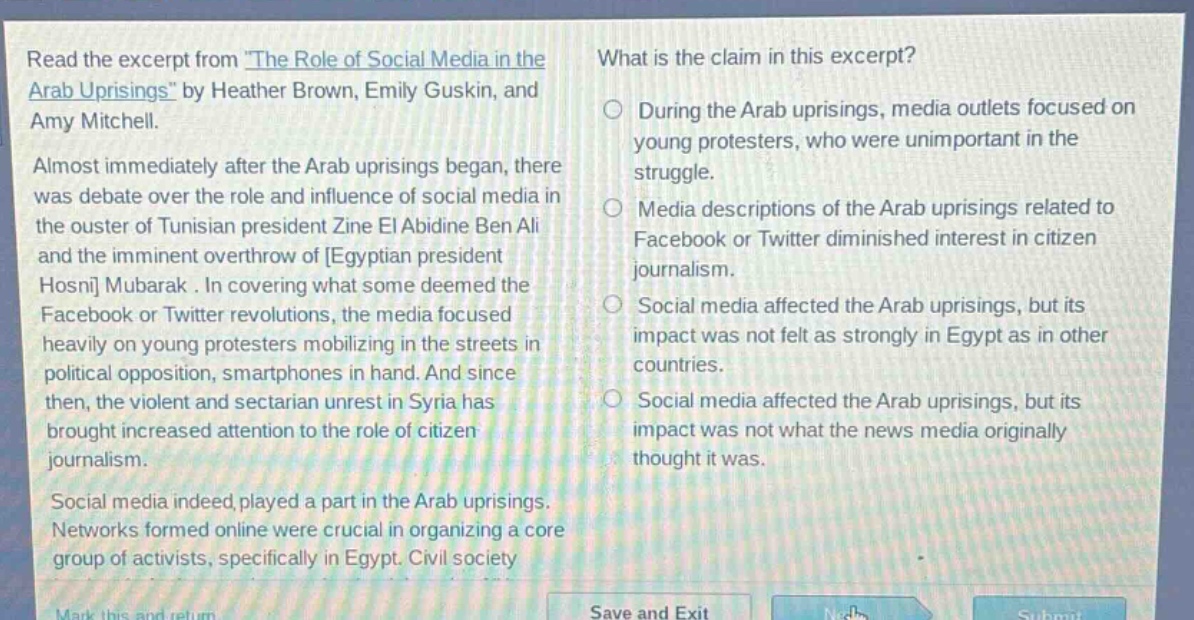
read the excerpt from the role of social media in the arab uprisings by heather brown, emily guskin, and amy mitchell. almost immediately after the arab uprisings began, there was debate over the role and influence of social media in the ouster of tunisian president zine el abidine ben ali and the imminent overthrow of egyptian president hosni mubarak. in covering what some deemed the facebook or twitter revolutions, the media focused heavily on young protesters mobilizing in the streets in political opposition, smartphones in hand. and since then, the violent and sectarian unrest in syria has brought increased attention to the role of citizen journalism. social media indeed played a part in the arab uprisings. networks formed online were crucial in organizing a core group of activists, specifically in egypt. civil society. what is the claim in this excerpt? during the arab uprisings, media outlets focused on young protesters, who were unimportant in the struggle. media descriptions of the arab uprisings related to facebook or twitter diminished interest in citizen journalism. social media affected the arab uprisings, but its impact was not felt as strongly in egypt as in other countries. social media affected the arab uprisings, but its impact was not what the news media originally thought it was.
Answer
Brief Explanations:
The text discusses the role of social - media in the Arab uprisings, noting that while it played a part, the media's initial perception of its impact may have been off. It mentions how social media was involved in organizing activists and how the focus on it during the uprisings was a point of debate.
Answer:
Social media affected the Arab uprisings, but its impact was not what the news media originally thought it was.