read the excerpt from the role of social media in the arab uprisings by heather brown, emily guskin, and amy…
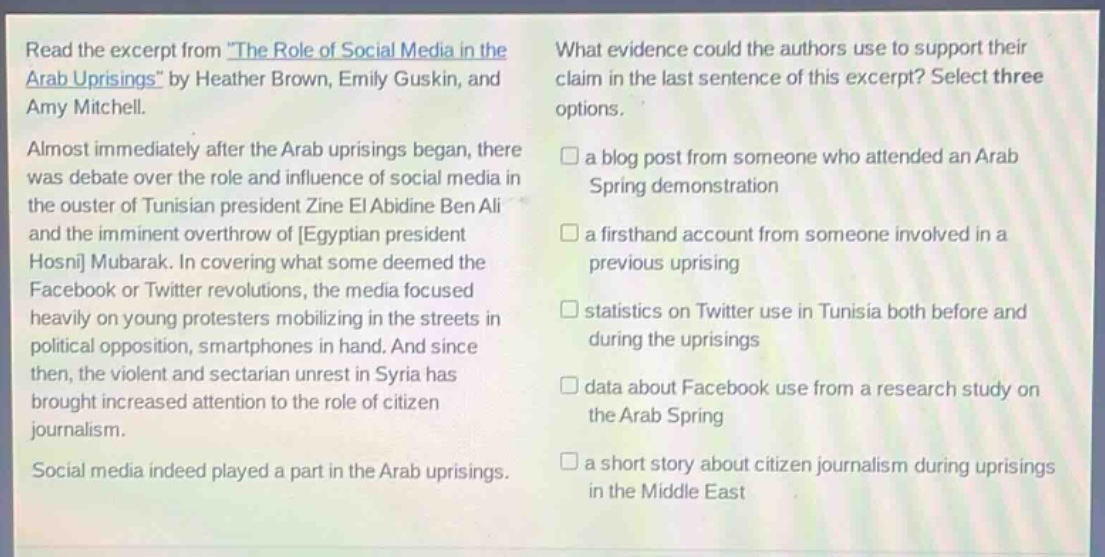
read the excerpt from the role of social media in the arab uprisings by heather brown, emily guskin, and amy mitchell. almost immediately after the arab uprisings began, there was debate over the role and influence of social media in the ouster of tunisian president zine el abidine ben ali and the imminent overthrow of egyptian president hosni mubarak. in covering what some deemed the facebook or twitter revolutions, the media focused heavily on young protesters mobilizing in the streets in political opposition, smartphones in hand. and since then, the violent and sectarian unrest in syria has brought increased attention to the role of citizen journalism. social media indeed played a part in the arab uprisings. what evidence could the authors use to support their claim in the last sentence of this excerpt? select three options. a blog post from someone who attended an arab spring demonstration a firsthand account from someone involved in a previous uprising statistics on twitter use in tunisia both before and during the uprisings data about facebook use from a research study on the arab spring a short story about citizen journalism during uprisings in the middle east
Answer
Answer:
A. a blog post from someone who attended an Arab Spring demonstration C. statistics on Twitter use in Tunisia both before and during the uprisings D. data about Facebook use from a research study on the Arab Spring
Brief Explanations:
A blog post is firsthand - like evidence. Statistics and research data provide quantitative support for the role of social media. A short - story may be anecdotal and less reliable, and a firsthand account from a previous uprising may not be directly relevant to the Arab Spring social - media claim.