read the following excerpt from levitt and dubner’s freakonomics. there is a tale, “the ring of gyges,” that…
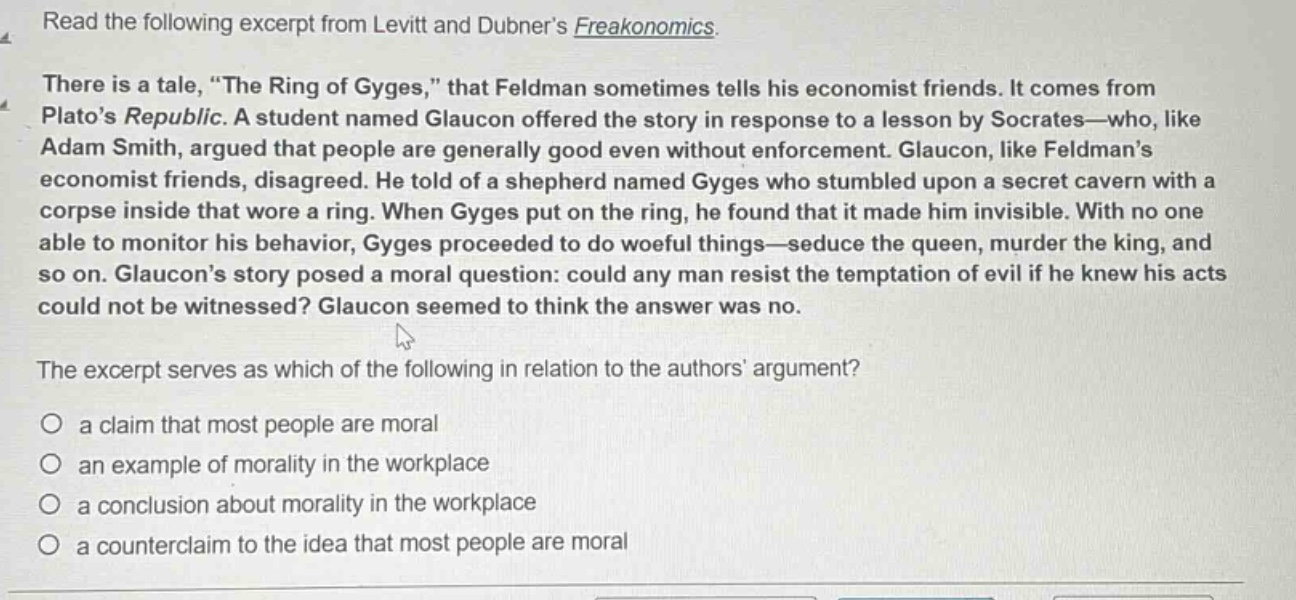
read the following excerpt from levitt and dubner’s freakonomics. there is a tale, “the ring of gyges,” that feldman sometimes tells his economist friends. it comes from plato’s republic. a student named glaucon offered the story in response to a lesson by socrates—who, like adam smith, argued that people are generally good even without enforcement. glaucon, like feldman’s economist friends, disagreed. he told of a shepherd named gyges who stumbled upon a secret cavern with a corpse inside that wore a ring. when gyges put on the ring, he found that it made him invisible. with no one able to monitor his behavior, gyges proceeded to do woeful things—seduce the queen, murder the king, and so on. glaucon’s story posed a moral question: could any man resist the temptation of evil if he knew his acts could not be witnessed? glaucon seemed to think the answer was no. the excerpt serves as which of the following in relation to the authors’ argument? a claim that most people are moral an example of morality in the workplace a conclusion about morality in the workplace a counter - claim to the idea that most people are moral
Answer
Brief Explanations:
Socrates argued people are generally good without enforcement. Glaucon's story of Gyges, who did evil when invisible, opposes this, serving as a counter - claim.
Answer:
D. a counterclaim to the idea that most people are moral