read the passage. in 1966, the supreme court ruled that defendants must be warned before they are…
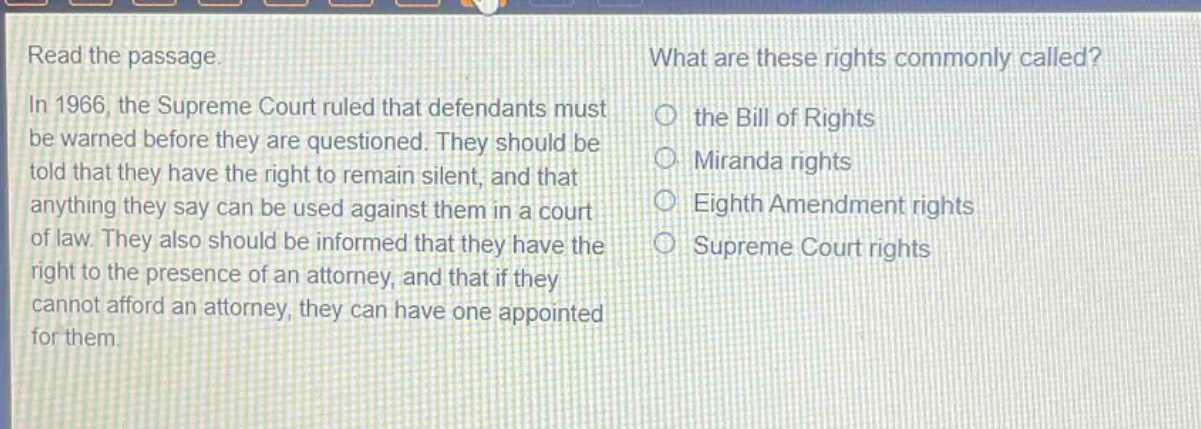
read the passage. in 1966, the supreme court ruled that defendants must be warned before they are questioned. they should be told that they have the right to remain silent, and that anything they say can be used against them in a court of law. they also should be informed that they have the right to the presence of an attorney, and that if they cannot afford an attorney, they can have one appointed for them. what are these rights commonly called? the bill of rights miranda rights eighth amendment rights supreme court rights
Answer
Answer:
B. Miranda rights
Brief Explanation:
In 1966, the Supreme - Court ruling about defendants' rights before questioning is known as Miranda rights. The Bill of Rights is the first ten amendments to the US Constitution. The Eighth Amendment relates to bail, fines, and cruel and unusual punishment. There is no such thing as "Supreme Court rights" in this context.