read the passage from the opinion of the court in dred scott v. sandford, written by justice taney. the…
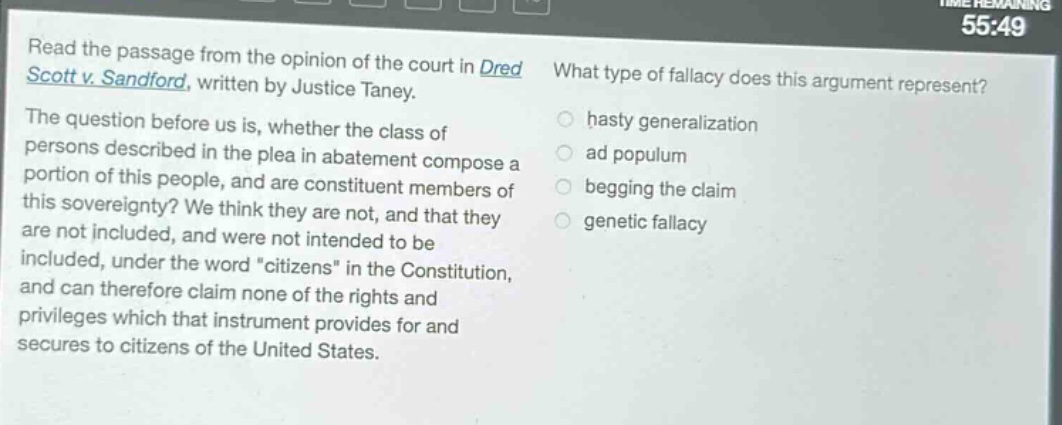
read the passage from the opinion of the court in dred scott v. sandford, written by justice taney. the question before us is, whether the class of persons described in the plea in abatement compose a portion of this people, and are constituent members of this sovereignty? we think they are not, and that they are not included, and were not intended to be included, under the word \citizens\ in the constitution, and can therefore claim none of the rights and privileges which that instrument provides for and secures to citizens of the united states. what type of fallacy does this argument represent? hasty generalization ad populum begging the claim genetic fallacy
Answer
Brief Explanations:
The court in Dred Scott v. Sandford assumes what it should be proving - that a certain class of people are not citizens and thus have no rights. This is begging the claim, where the conclusion is assumed in the premise. Hasty generalization is making a broad conclusion from insufficient evidence. Ad populum appeals to popularity. Genetic fallacy judges something based on its origin.
Answer:
begging the claim