a researcher is interested in whether using mental imagery can help people remember specific details when…
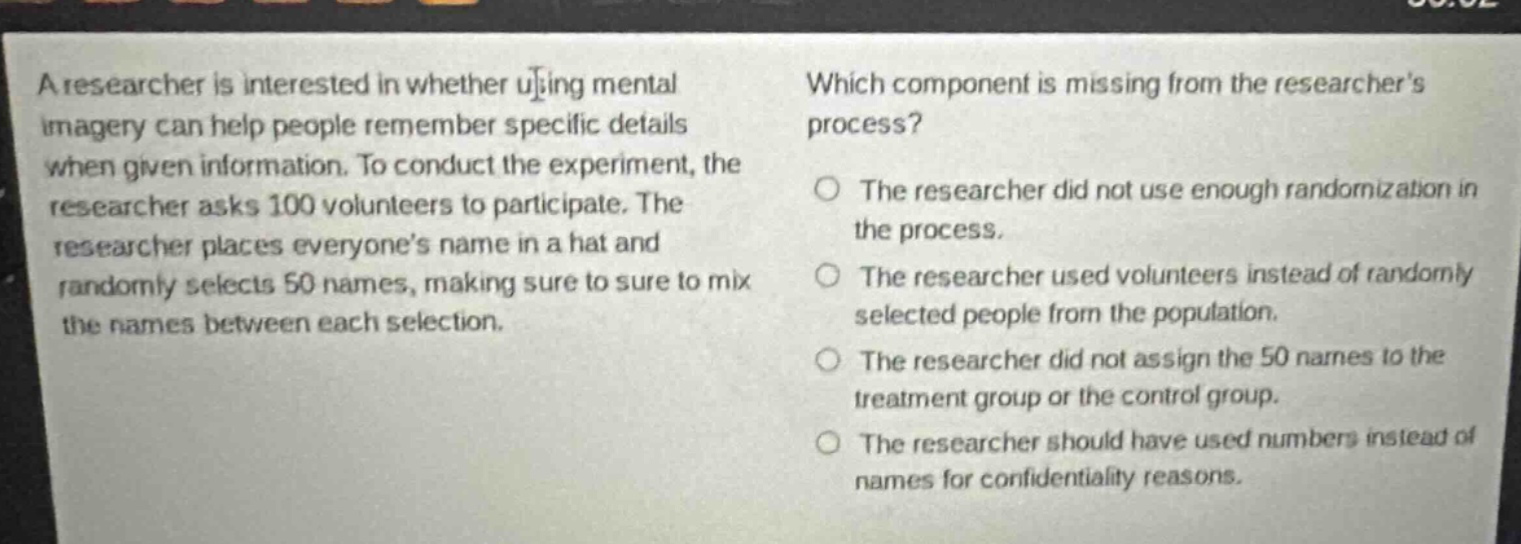
a researcher is interested in whether using mental imagery can help people remember specific details when given information. to conduct the experiment, the researcher asks 100 volunteers to participate. the researcher places everyones name in a hat and randomly selects 50 names, making sure to sure to mix the names between each selection. which component is missing from the researchers process? the researcher did not use enough randomization in the process. the researcher used volunteers instead of randomly selected people from the population. the researcher did not assign the 50 names to the treatment group or the control group. the researcher should have used numbers instead of names for confidentiality reasons.
Answer
Brief Explanations:
In a proper experiment, after selecting participants, they should be assigned to treatment and control groups. Here, the researcher selected 50 out of 100 volunteers but didn't assign them to either group. Randomization of selection is done, and using volunteers isn't the main issue. Confidentiality about using names isn't the key - missing component.
Answer:
The researcher did not assign the 50 names to the treatment group or the control group.