source 4\nstudents in year-round schools do better, study shows\nthe globe and mail\nnatalie…
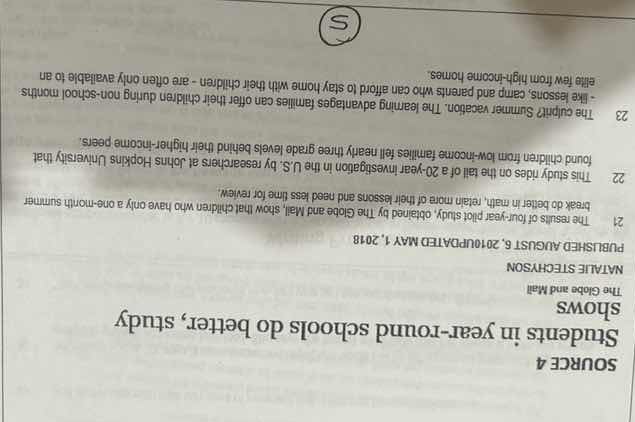
source 4\nstudents in year-round schools do better, study shows\nthe globe and mail\nnatalie stechyson\npublished august 6, 2010 updated may 1, 2018\n21 the results of four-year pilot study, obtained by the globe and mail, show that children who have only a one-month summer break do better in math, retain more of their lessons and need less time for review.\n22 this study rides on the tail of a 20-year investigation in the u.s. by researchers at johns hopkins university that found children from low-income families fell nearly three grade levels behind their higher-income peers.\n23 the culprit? summer vacation. the learning advantages families can offer their children during non-school months - like lessons, camp and parents who can afford to stay home with their children - are often only available to an elite few from high-income homes.
Answer
Brief Explanations:
The provided text discusses the academic advantages of year-round schooling and the negative impact of long summer vacations on students from low-income families.
- Paragraph 21 highlights a four-year pilot study showing that students with shorter summer breaks (one month) perform better in math and retain more knowledge.
- Paragraph 22 references a 20-year Johns Hopkins University study finding that low-income students fall nearly three grade levels behind their higher-income peers due to the "summer slide."
- Paragraph 23 identifies the cause as unequal access to summer learning opportunities (camps, lessons, etc.), which are often only affordable for high-income families.
Answer:
The text argues that year-round schooling helps close the achievement gap by reducing summer learning loss, which disproportionately affects low-income students who lack access to expensive summer enrichment programs.