the standing rock protests emphasized the intersection of environmental justice and:\n a. globalization\n b…
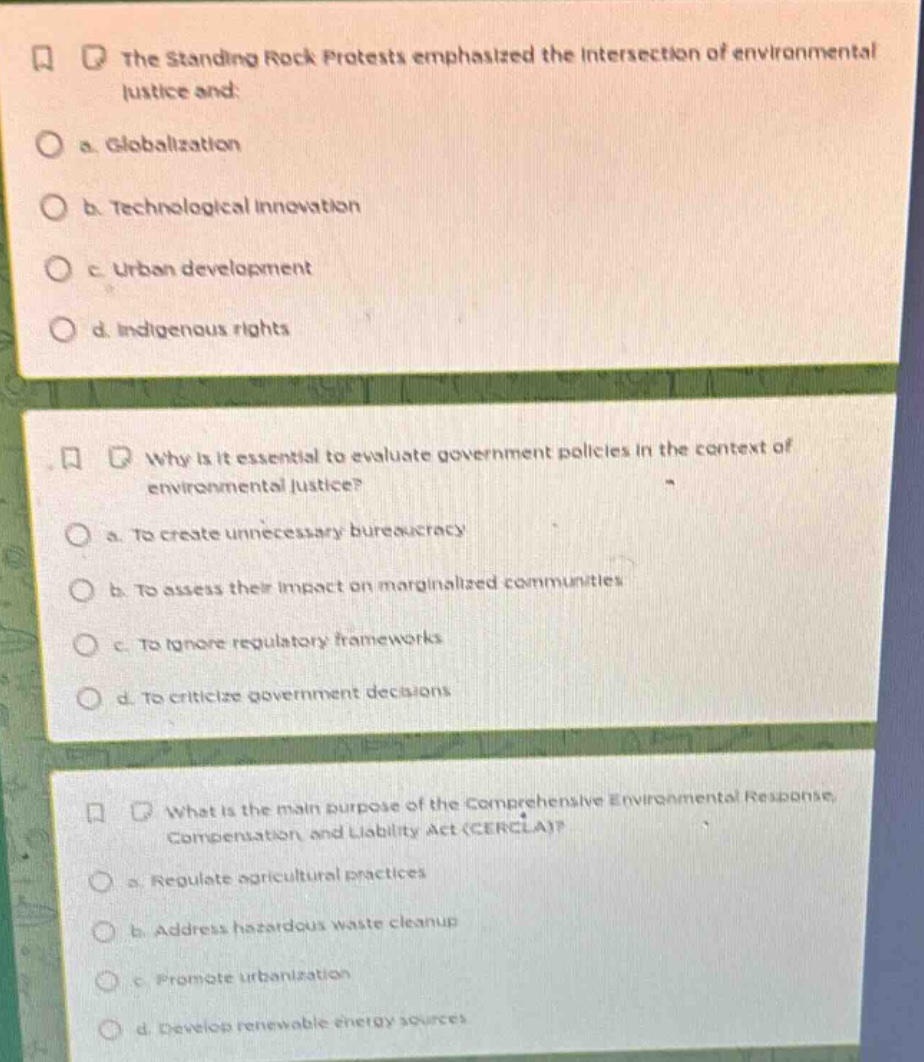
the standing rock protests emphasized the intersection of environmental justice and:\n a. globalization\n b. technological innovation\n c. urban development\n d. indigenous rights\n\nwhy is it essential to evaluate government policies in the context of environmental justice?\n a. to create unnecessary bureaucracy\n b. to assess their impact on marginalized communities\n c. to ignore regulatory frameworks\n d. to criticize government decisions\n\nwhat is the main purpose of the comprehensive environmental response, compensation and liability act (cercla)?\n a. regulate agricultural practices\n b. address hazardous waste cleanup\n c. promote urbanization\n d. develop renewable energy sources
Answer
Brief Explanations:
- The Standing Rock Protests were led by indigenous people to protect their land and water rights, highlighting the intersection of environmental justice and indigenous rights.
- Evaluating government policies in the context of environmental justice is crucial to assess how they impact marginalized communities, as these communities often bear a disproportionate burden of environmental harm.
- The Comprehensive Environmental Response, Compensation, and Liability Act (CERCLA) is mainly focused on addressing hazardous - waste cleanup.
Answer:
- d. Indigenous rights
- b. To assess their impact on marginalized communities
- b. Address hazardous waste cleanup