which statement best describes the precedent set by the supreme court in new york times v. united states…
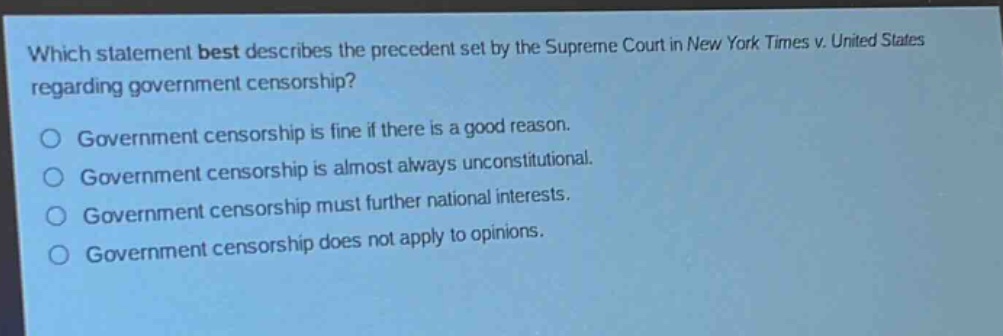
which statement best describes the precedent set by the supreme court in new york times v. united states regarding government censorship?\no government censorship is fine if there is a good reason.\no government censorship is almost always unconstitutional.\no government censorship must further national interests.\no government censorship does not apply to opinions.
Answer
Answer:
Government censorship is almost always unconstitutional.
Brief Explanations:
In New York Times v. United States, the Supreme - Court generally restricted government's power to censor, leaning towards the unconstitutionality of most forms of prior restraint (censorship before publication). This case strengthened the First - Amendment protection of freedom of the press and speech, making it difficult for the government to censor without strong justifications, thus government censorship is almost always considered unconstitutional.