in the supreme court case korematsu v. united states, the court decided that the fourteenth amendment did…
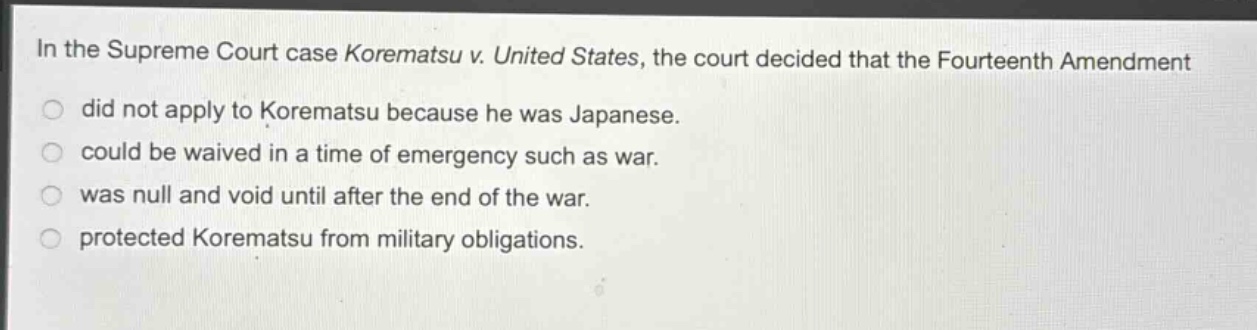
in the supreme court case korematsu v. united states, the court decided that the fourteenth amendment did not apply to korematsu because he was japanese. could be waived in a time of emergency such as war. was null and void until after the end of the war. protected korematsu from military obligations.
Answer
Brief Explanations:
In the Korematsu v. United States case, the Supreme - Court held that in times of war (a national emergency), the rights guaranteed by the Fourteenth Amendment could be waived. The court's decision was based on the government's claim of military necessity during World War II.
Answer:
B. could be waived in a time of emergency such as war.