when the supreme court makes a ruling on a case that serves to interpret a law passed by congress, it is an…
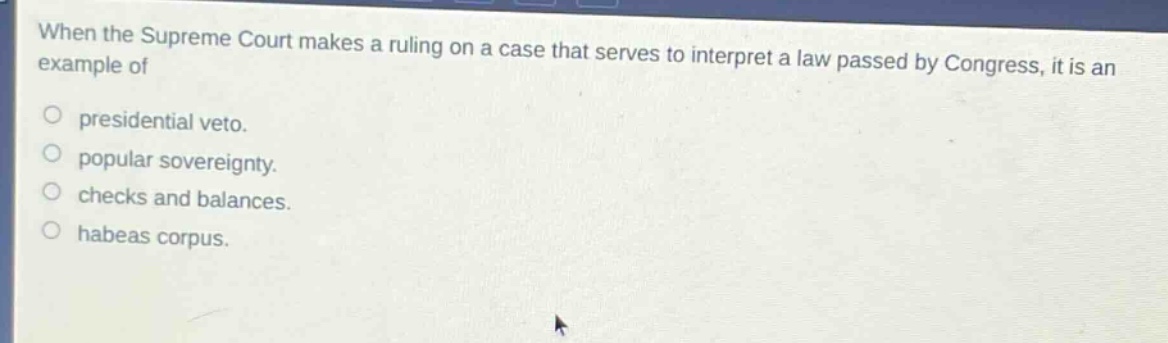
when the supreme court makes a ruling on a case that serves to interpret a law passed by congress, it is an example of\npresidential veto.\npopular sovereignty.\nchecks and balances.\nhabeas corpus.
Answer
Brief Explanations:
The Supreme Court interpreting a law passed by Congress is a way to balance the legislative power of Congress. Checks - and - balances is a system where different branches of government can limit each other's power. The Supreme Court's power of judicial review is an example of this system. A presidential veto is the president's power to reject a bill passed by Congress. Popular sovereignty is the idea that the power of the government comes from the people. Habeas corpus is the right to have a judge determine the lawfulness of one's imprisonment.
Answer:
C. checks and balances