though the outcomes of schenck and new york times differed, what did these decisions have in common?\nthe…
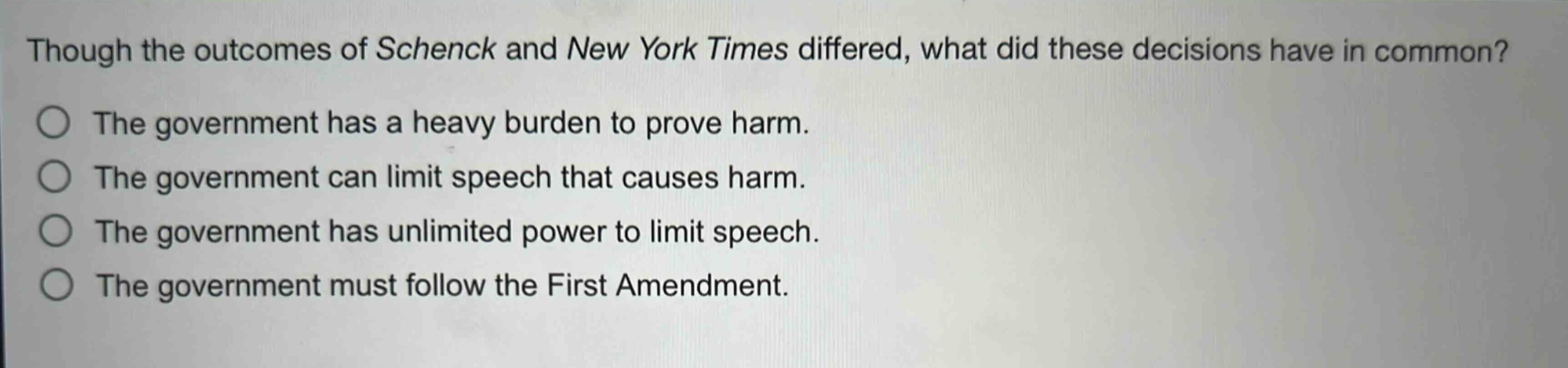
though the outcomes of schenck and new york times differed, what did these decisions have in common?\nthe government has a heavy burden to prove harm.\nthe government can limit speech that causes harm.\nthe government has unlimited power to limit speech.\nthe government must follow the first amendment.
Answer
Answer:
The government can limit speech that causes harm.
Brief Explanations:
In both Schenck and New York Times cases, the principle that the government can restrict speech when it causes harm was relevant. Schenck involved speech that could potentially disrupt the draft - a form of harm. In New York Times, certain speech limitations were considered in the context of potential harm to national interests or other legitimate concerns. The First Amendment is not absolute, and both cases recognized the government's right to limit harmful speech.