total population: 58,126,212 68% urban total population: 15,306,252 16% urban which of the following…
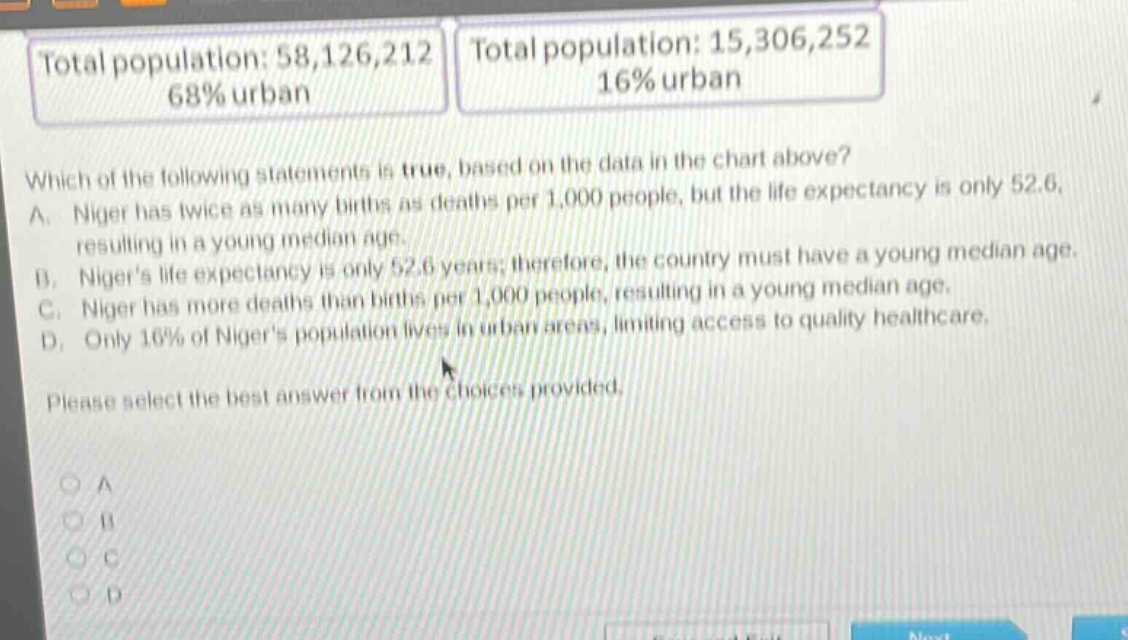
total population: 58,126,212 68% urban total population: 15,306,252 16% urban which of the following statements is true, based on the data in the chart above? a. niger has twice as many births as deaths per 1,000 people, but the life expectancy is only 52.6, resulting in a young median age. b. nigers life expectancy is only 52.6 years; therefore, the country must have a young median age. c. niger has more deaths than births per 1,000 people, resulting in a young median age. d. only 16% of nigers population lives in urban areas, limiting access to quality healthcare. please select the best answer from the choices provided. a b c d
Answer
Brief Explanations:
The data in the image shows urban - population percentages for two populations. Option D is directly related to the given data about the urban population percentage in Niger. Options A, B, and C introduce information not present in the provided data (birth - death ratios and life expectancy implications on median age).
Answer:
D. Only 16% of Niger's population lives in urban areas, limiting access to quality healthcare.