to understand political power, we must consider the condition in which nature puts all men. it is a state of…
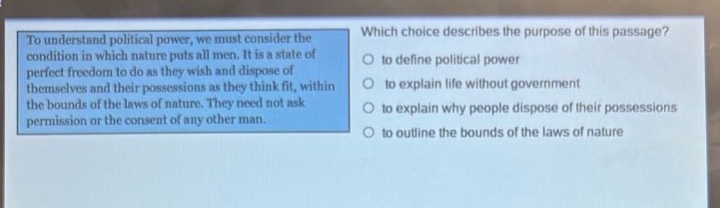
to understand political power, we must consider the condition in which nature puts all men. it is a state of perfect freedom to do as they wish and dispose of themselves and their possessions as they think fit, within the bounds of the laws of nature. they need not ask permission or the consent of any other man. which choice describes the purpose of this passage? to define political power to explain life without government to explain why people dispose of their possessions to outline the bounds of the laws of nature
Answer
Brief Explanation:
The passage starts by saying to understand political power, we must consider a state of nature where men have perfect freedom. It then describes life in this state - people can do as they wish and dispose of things without asking others. It's mainly about life without government. It doesn't just define political power, nor is the focus on why people dispose of possessions or the bounds of the laws of nature.
Answer:
to explain life without government