in the united states today, the government\n- owns, but does not control, the major sources of media.\n…
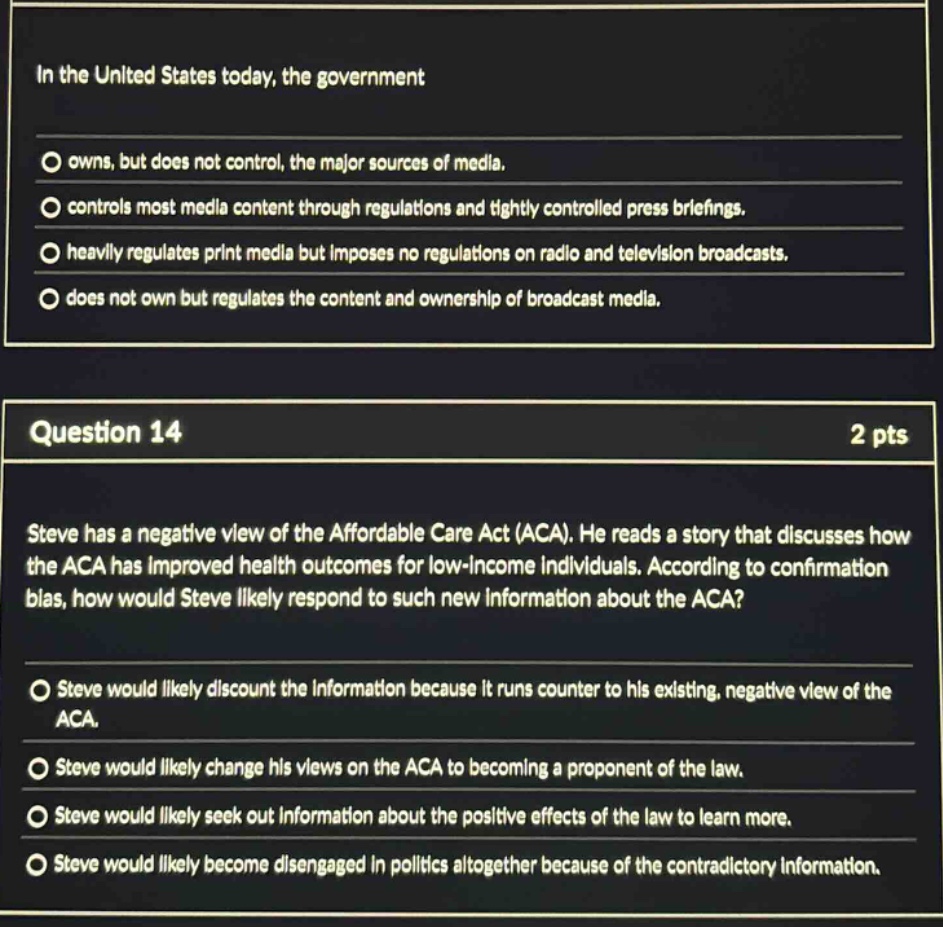
in the united states today, the government\n- owns, but does not control, the major sources of media.\n- controls most media content through regulations and tightly controlled press briefings.\n- heavily regulates print media but imposes no regulations on radio and television broadcasts.\n- does not own but regulates the content and ownership of broadcast media.\n\nquestion 14\n2 pts\nsteve has a negative view of the affordable care act (aca). he reads a story that discusses how the aca has improved health outcomes for low - income individuals. according to confirmation bias, how would steve likely respond to such new information about the aca?\n- steve would likely discount the information because it runs counter to his existing, negative view of the aca.\n- steve would likely change his views on the aca to becoming a proponent of the law.\n- steve would likely seek out information about the positive effects of the law to learn more.\n- steve would likely become disengaged in politics altogether because of the contradictory information.
Answer
Brief Explanations:
For the first question, in the US, the government doesn't own major media sources but regulates broadcast - media content and ownership. For the second question, confirmation bias leads people to reject information that contradicts their pre - existing beliefs. So Steve, with a negative view of ACA, is likely to discount new positive information about it.
Answer:
- does not own but regulates the content and ownership of broadcast media.
- Steve would likely discount the information because it runs counter to his existing, negative view of the ACA.