why did the us supreme court rule against the state of tennessee in baker v. carr?\no tennessee had…
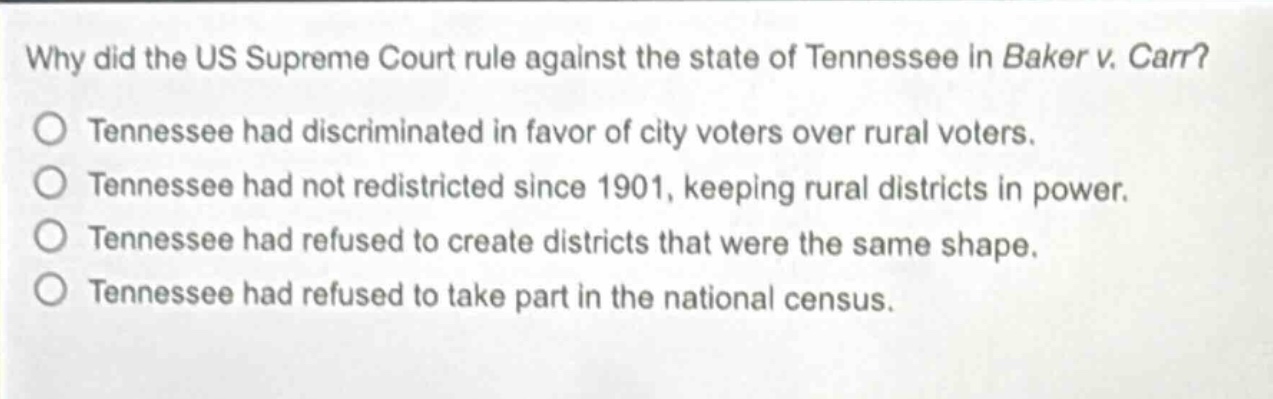
why did the us supreme court rule against the state of tennessee in baker v. carr?\no tennessee had discriminated in favor of city voters over rural voters.\no tennessee had not redistricted since 1901, keeping rural districts in power.\no tennessee had refused to create districts that were the same shape.\no tennessee had refused to take part in the national census.
Answer
Answer:
Tennessee had not redistricted since 1901, keeping rural districts in power.
Brief Explanations:
In Baker v. Carr, Tennessee's lack of redistricting since 1901 led to unequal representation, with rural districts over - represented relative to population changes, which the Supreme Court ruled against.