using the decision - making process\npauline has the option of studying for two more hours for her exam…
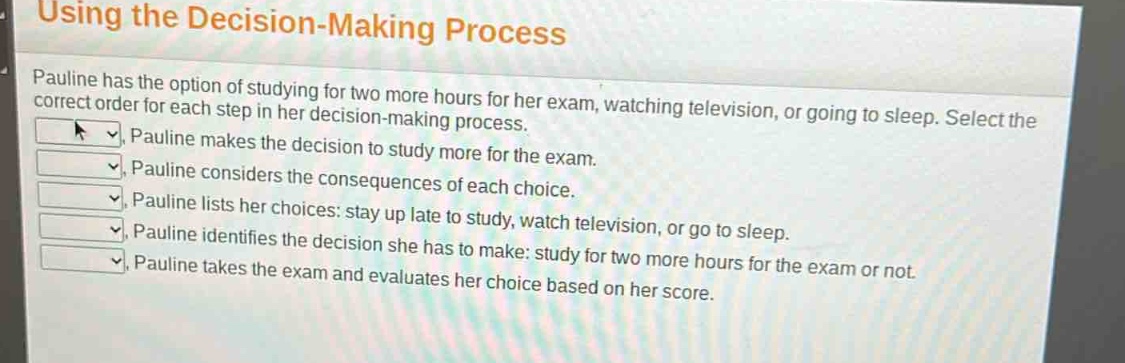
using the decision - making process\npauline has the option of studying for two more hours for her exam, watching television, or going to sleep. select the correct order for each step in her decision - making process.\npauline makes the decision to study more for the exam.\npauline considers the consequences of each choice.\npauline lists her choices: stay up late to study, watch television, or go to sleep.\npauline identifies the decision she has to make: study for two more hours for the exam or not.\npauline takes the exam and evaluates her choice based on her score.
Answer
Brief Explanations:
The typical decision - making process starts with identifying the decision to be made. Then, the available choices are listed. After that, the consequences of each choice are considered. A decision is then made. Finally, the decision is evaluated. So, Pauline first identifies the decision she has to make: study for two more hours for the exam or not. Then she lists her choices: stay up late to study, watch television, or go to sleep. Next, she considers the consequences of each choice. After that, she makes the decision to study more for the exam. Finally, she takes the exam and evaluates her choice based on her score.
Answer:
- Pauline identifies the decision she has to make: study for two more hours for the exam or not.
- Pauline lists her choices: stay up late to study, watch television, or go to sleep.
- Pauline considers the consequences of each choice.
- Pauline makes the decision to study more for the exam.
- Pauline takes the exam and evaluates her choice based on her score.