we conclude that, in the field of public education, the doctrine of \separate but equal\ has no place…
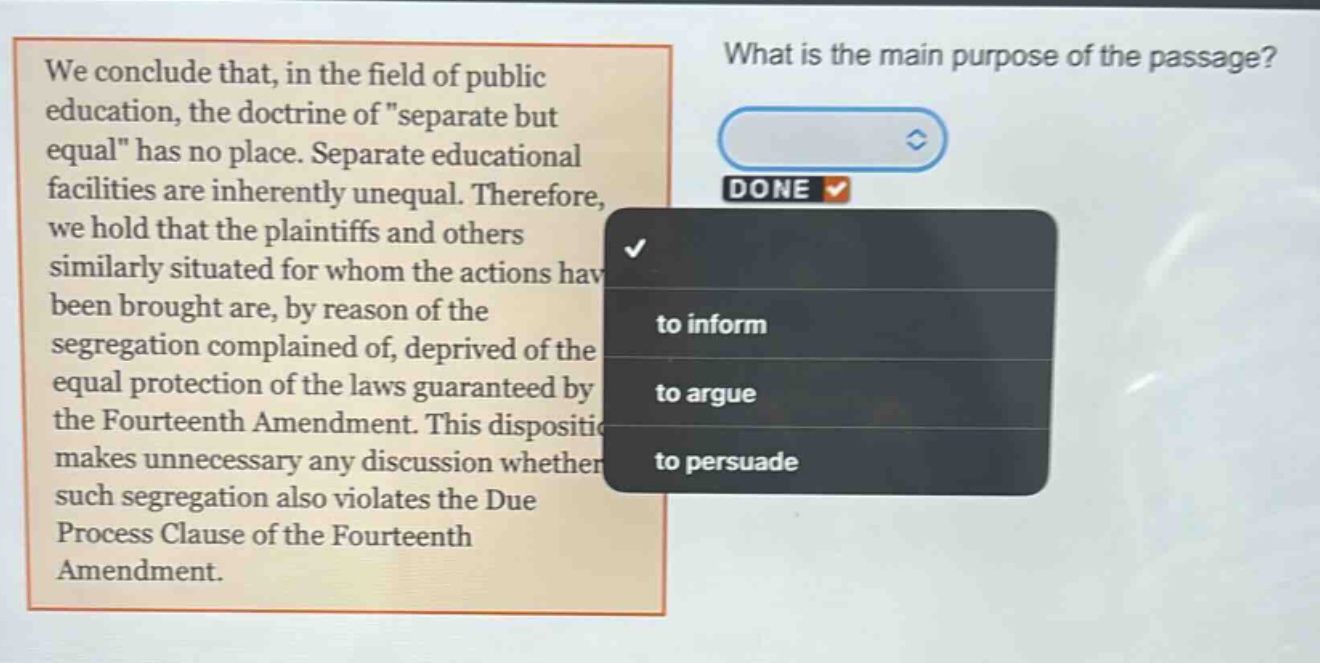
we conclude that, in the field of public education, the doctrine of \separate but equal\ has no place. separate educational facilities are inherently unequal. therefore, we hold that the plaintiffs and others similarly situated for whom the actions have been brought are, by reason of the segregation complained of, deprived of the equal protection of the laws guaranteed by the fourteenth amendment. this disposition makes unnecessary any discussion whether such segregation also violates the due process clause of the fourteenth amendment. what is the main purpose of the passage? to inform to argue to persuade
Answer
Brief Explanations:
The passage presents an argument against the "separate but equal" doctrine in public - education, stating that separate educational facilities are inherently unequal and that segregation deprives plaintiffs of equal protection. It is making a case rather than just informing or persuading in a more general sense.
Answer:
to argue