how do zero - tolerance policies help enforce a safe and supportive environment in schools and…
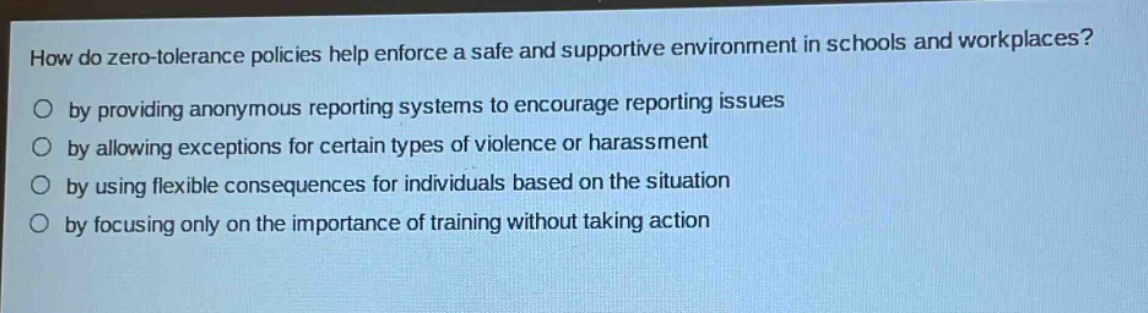
how do zero - tolerance policies help enforce a safe and supportive environment in schools and workplaces?\nby providing anonymous reporting systems to encourage reporting issues\nby allowing exceptions for certain types of violence or harassment\nby using flexible consequences for individuals based on the situation\nby focusing only on the importance of training without taking action
Answer
Brief Explanations:
Zero - tolerance policies aim for a strict stance against negative behaviors. Anonymous reporting systems encourage people to come forward with issues, which helps in identifying and addressing problems to create a safe and supportive environment. Allowing exceptions goes against the zero - tolerance concept. Flexible consequences also contradict the strict nature. Focusing only on training without action doesn't enforce the policy effectively.
Answer:
by providing anonymous reporting systems to encourage reporting issues