4/17 - bellringer - changes to endangered species act\npassed in 1973, the endangered species act offers a…
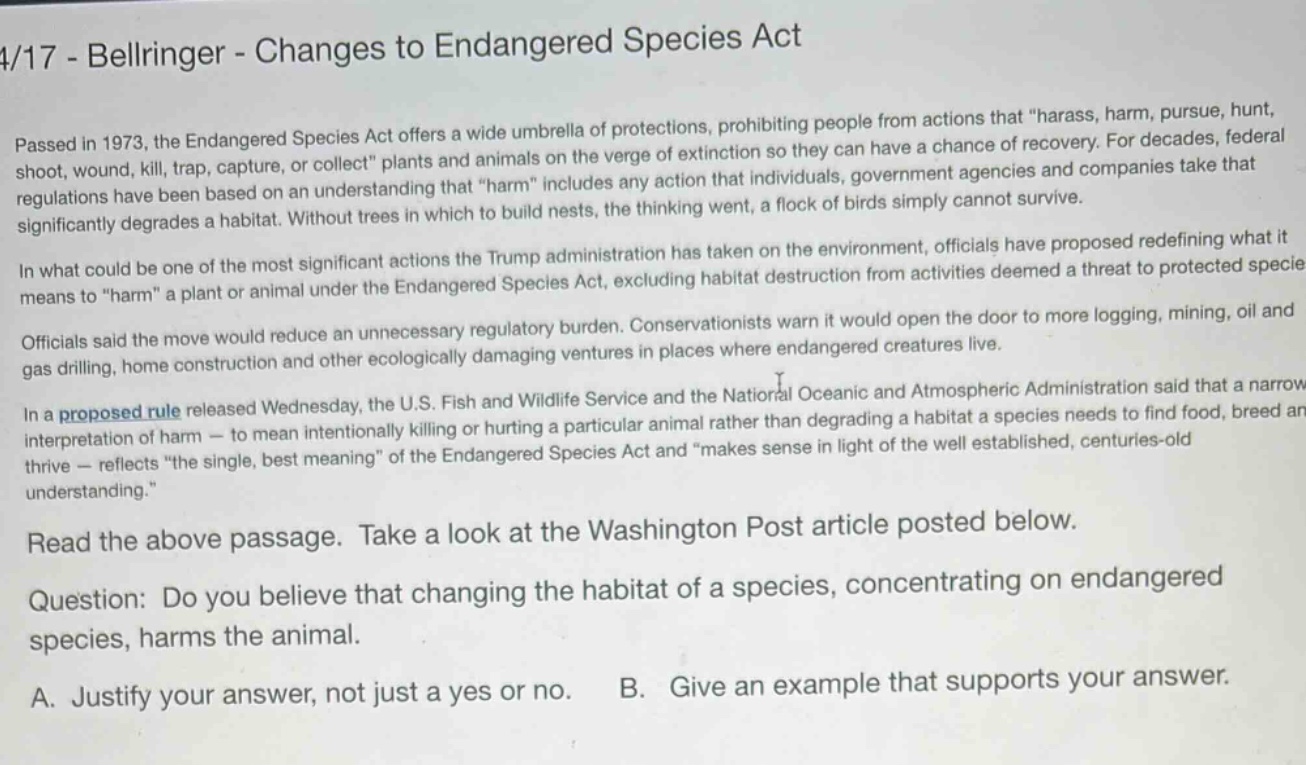
4/17 - bellringer - changes to endangered species act\npassed in 1973, the endangered species act offers a wide umbrella of protections, prohibiting people from actions that “harass, harm, pursue, hunt, shoot, wound, kill, trap, capture, or collect” plants and animals on the verge of extinction so they can have a chance of recovery. for decades, federal regulations have been based on an understanding that “harm” includes any action that individuals, government agencies and companies take that significantly degrades a habitat. without trees in which to build nests, the thinking went, a flock of birds simply cannot survive.\nin what could be one of the most significant actions the trump administration has taken on the environment, officials have proposed redefining what it means to “harm” a plant or animal under the endangered species act, excluding habitat destruction from activities deemed a threat to protected species.\nofficials said the move would reduce an unnecessary regulatory burden. conservationists warn it would open the door to more logging, mining, oil and gas drilling, home construction and other ecologically damaging ventures in places where endangered creatures live.\nin a proposed rule released wednesday, the u.s. fish and wildlife service and the national oceanic and atmospheric administration said that a narrow interpretation of harm — to mean intentionally killing or hurting a particular animal rather than degrading a habitat a species needs to find food, breed and thrive — reflects “the single, best meaning” of the endangered species act and “makes sense in light of the well - established, centuries - old understanding.”\nread the above passage. take a look at the washington post article posted below.\nquestion: do you believe that changing the habitat of a species, concentrating on endangered species, harms the animal.\na. justify your answer, not just a yes or no. b. give an example that supports your answer.
Answer
Brief Explanations:
A. Changing the habitat of an endangered species harms the animal. Endangered species often have specific habitat - requirements for survival, such as food sources, breeding grounds, and shelter. Altering their habitat disrupts these essential elements. For example, if a forest is cleared for logging in an area where an endangered bird species lives, the birds lose their nesting sites and food sources (like insects that live in the trees). This can lead to a decline in their population and make it harder for them to recover. B. The example of the forest - dwelling endangered bird species losing its nesting and food sources due to logging is a clear case. Without the trees, the birds cannot build nests, and the insects that form their diet are also displaced or killed, thus harming the birds.
Answer:
A. Changing the habitat of an endangered species harms the animal because it disrupts their essential survival elements like food, breeding, and shelter. B. Logging in a forest where an endangered bird species lives, causing loss of nesting sites and food sources.