40 41 44 46 48 50 52 54 56 58 60\ninches\ngirls heights\n40 41 44 46 48 50 52 54 56 58 60\ninches\nwhen…
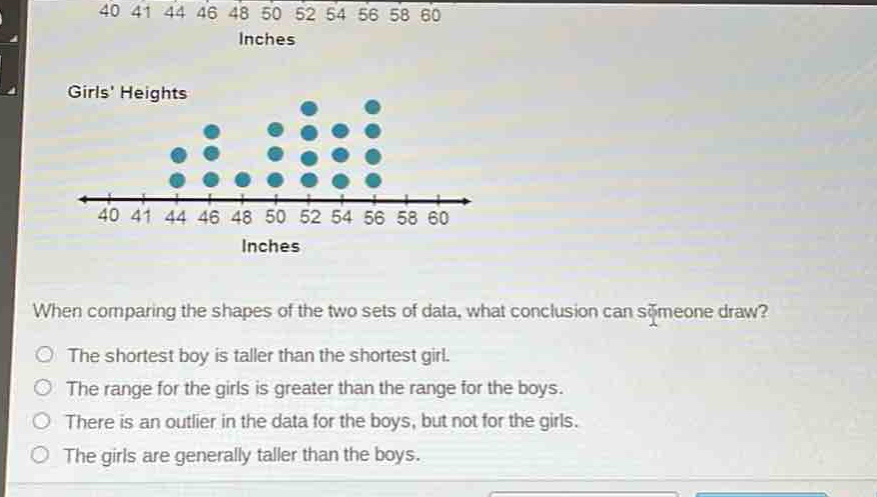
40 41 44 46 48 50 52 54 56 58 60\ninches\ngirls heights\n40 41 44 46 48 50 52 54 56 58 60\ninches\nwhen comparing the shapes of the two sets of data, what conclusion can someone draw?\nthe shortest boy is taller than the shortest girl.\nthe range for the girls is greater than the range for the boys.\nthere is an outlier in the data for the boys, but not for the girls.\nthe girls are generally taller than the boys.
Answer
Explanation:
Step1: Recall range formula
Range = Maximum - Minimum
Step2: Find girls' range
From the dot - plot, girls' minimum height is 44 inches and maximum is 58 inches. So range for girls = 58 - 44 = 14 inches. But we have no data about boys' heights to calculate their range and make a comparison for option B.
Step3: Check for outliers
We have no data about boys' heights to check for outliers in boys' data for option C.
Step4: Check height comparison
We have no data about boys' heights to compare if girls are generally taller for option D.
Step5: Check minimum height comparison
From the dot - plot, the shortest girl's height is 44 inches. Since we have no data about boys' heights, we assume we are only comparing based on the given girl's data and the statement in option A cannot be evaluated without boys' data. But if we assume we are only working with the girl's data presented, we note that this option is not relevant as we have no boys' data. Since we have no information about boys' heights except the claim statements, we assume we are supposed to analyze the girl's data only in terms of what can be determined from the given dot - plot. The dot - plot only shows girls' heights and we cannot make statements about boys' heights. However, if we assume the question is mis - worded and we are just looking at the internal characteristics of the girls' data, we note that we cannot confirm options A, C, D without boys' data. For option B, since we have no boys' data, we cannot calculate the boys' range. But if we assume we are only focused on the girls' data, we can say that without boys' data, we cannot make any of the comparisons in options A, B, C, D. But if we assume the question is about the girls' data in isolation (despite the mention of boys), we note that we have no way to confirm any of these statements as we lack boys' data. If we assume we are just analyzing the girls' data, we can say that we cannot make any of these conclusions as we have no boys' data for comparison. But if we assume the question is a mis - phrased one about the girls' data only, we note that we cannot confirm any of these statements.
Answer:
There is not enough information given (since we have no data about boys' heights) to draw any of the conclusions presented.