answer the questions below. (a) a yoga instructor collected student data. she found that students who had…
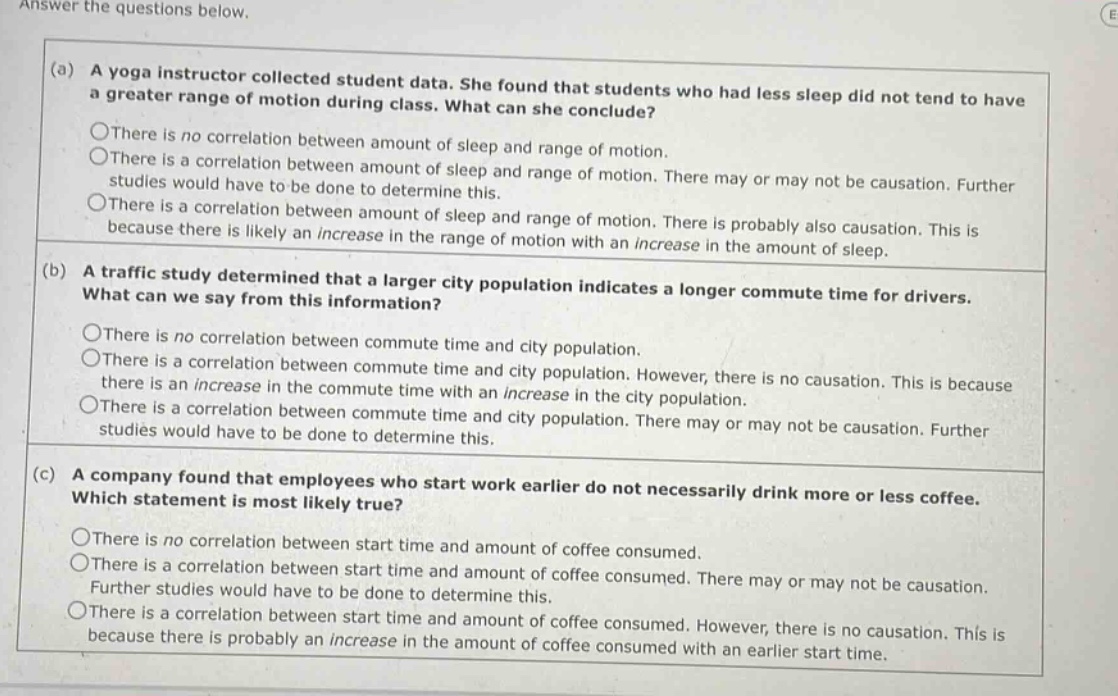
answer the questions below. (a) a yoga instructor collected student data. she found that students who had less sleep did not tend to have a greater range of motion during class. what can she conclude? there is no correlation between amount of sleep and range of motion. there is a correlation between amount of sleep and range of motion. there may or may not be causation. further studies would have to be done to determine this. there is a correlation between amount of sleep and range of motion. there is probably also causation. this is because there is likely an increase in the range of motion with an increase in the amount of sleep. (b) a traffic study determined that a larger city population indicates a longer commute time for drivers. what can we say from this information? there is no correlation between commute time and city population. there is a correlation between commute time and city population. however, there is no causation. this is because there is an increase in the commute time with an increase in the city population. there is a correlation between commute time and city population. there may or may not be causation. further studies would have to be done to determine this. (c) a company found that employees who start work earlier do not necessarily drink more or less coffee. which statement is most likely true? there is no correlation between start time and amount of coffee consumed. there is a correlation between start time and amount of coffee consumed. there may or may not be causation. further studies would have to be done to determine this. there is a correlation between start time and amount of coffee consumed. however, there is no causation. this is because there is probably an increase in the amount of coffee consumed with an earlier start time.
Answer
Brief Explanations:
(a) Since less sleep doesn't tend to relate to range of motion, no correlation. (b) Larger population means longer commute shows correlation, causation unknown. (c) Employees starting earlier don't have a clear coffee - drinking pattern, so no correlation.
Answer:
(a) There is no correlation between amount of sleep and range of motion. (b) There is a correlation between commute time and city population. There may or may not be causation. Further studies would have to be done to determine this. (c) There is no correlation between start time and amount of coffee consumed.