archaeologists studying ancient roman concrete have long wondered why certain 2,000 - year - old structures…
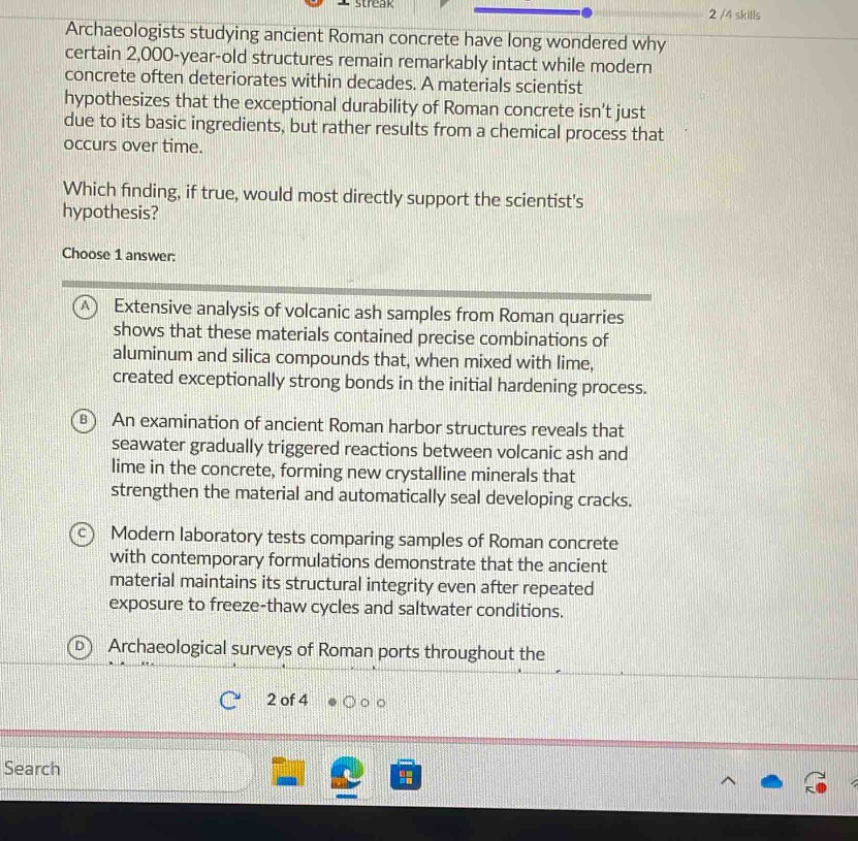
archaeologists studying ancient roman concrete have long wondered why certain 2,000 - year - old structures remain remarkably intact while modern concrete often deteriorates within decades. a materials scientist hypothesizes that the exceptional durability of roman concrete isnt just due to its basic ingredients, but rather results from a chemical process that occurs over time. which finding, if true, would most directly support the scientists hypothesis? choose 1 answer: a extensive analysis of volcanic ash samples from roman quarries shows that these materials contained precise combinations of aluminum and silica compounds that, when mixed with lime, created exceptionally strong bonds in the initial hardening process. b an examination of ancient roman harbor structures reveals that seawater gradually triggered reactions between volcanic ash and lime in the concrete, forming new crystalline minerals that strengthen the material and automatically seal developing cracks. c modern laboratory tests comparing samples of roman concrete with contemporary formulations demonstrate that the ancient material maintains its structural integrity even after repeated exposure to freeze - thaw cycles and saltwater conditions. d archaeological surveys of roman ports throughout the 2 of 4
Answer
Brief Explanations:
The scientist's hypothesis is that Roman concrete's durability results from a chemical process over time, not just ingredients. Option B describes a chemical process (seawater - triggered reactions forming new minerals and sealing cracks) that occurs over time in ancient Roman harbor structures, directly supporting the hypothesis. Option A focuses on initial hardening process due to ingredient combinations. Option C just shows Roman concrete's resistance to certain conditions without a time - based chemical process. Option D is an archaeological survey without any mention of a chemical process for durability.
Answer:
B. An examination of ancient Roman harbor structures reveals that seawater gradually triggered reactions between volcanic ash and lime in the concrete, forming new crystalline minerals that strengthen the material and automatically seal developing cracks.