customers in a coffee shop were asked if they prefer caffeinated or decaffeinated coffee and if they prefer…
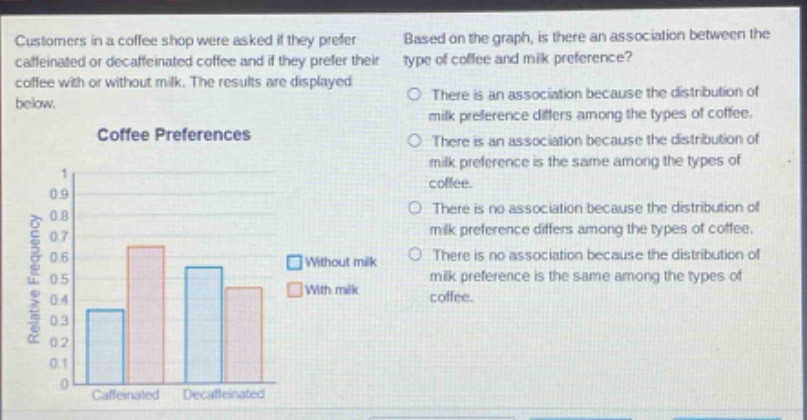
customers in a coffee shop were asked if they prefer caffeinated or decaffeinated coffee and if they prefer their coffee with or without milk. the results are displayed below. based on the graph, is there an association between the type of coffee and milk preference? there is an association because the distribution of milk preference differs among the types of coffee. there is an association because the distribution of milk preference is the same among the types of coffee. there is no association because the distribution of milk preference differs among the types of coffee. there is no association because the distribution of milk preference is the same among the types of coffee.
Answer
Brief Explanations:
If there is an association between two variables, the distribution of one variable should differ based on the levels of the other variable. Here, the distribution of milk - preference (with or without milk) differs between caffeinated and decaffeinated coffee types.
Answer:
There is an association because the distribution of milk preference differs among the types of coffee.