which data set has an outlier?\no 25, 36, 44, 51, 62, 77\no 3, 3, 3, 7, 9, 9, 10, 14\no 8, 17, 18, 20, 20…
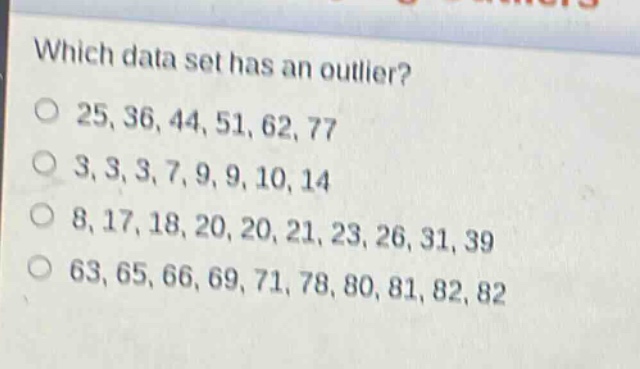
which data set has an outlier?\no 25, 36, 44, 51, 62, 77\no 3, 3, 3, 7, 9, 9, 10, 14\no 8, 17, 18, 20, 20, 21, 23, 26, 31, 39\no 63, 65, 66, 69, 71, 78, 80, 81, 82, 82
Answer
Explanation:
Step1: Understand outlier concept
An outlier is a data - point that is significantly different from other data - points in a dataset.
Step2: Analyze first dataset
The dataset (25,36,44,51,62,77) has a relatively smooth increase, no extreme values.
Step3: Analyze second dataset
In the dataset (3,3,3,7,9,9,10,14), the values are in a relatively close range, no extreme outlier.
Step4: Analyze third dataset
For the dataset (8,17,18,20,20,21,23,26,31,39), the value (8) is much smaller than the rest of the values which are mostly in the (17 - 39) range. It is an outlier.
Step5: Analyze fourth dataset
The dataset (63,65,66,69,71,78,80,81,82,82) has a consistent increase, no outlier.
Answer:
(8,17,18,20,20,21,23,26,31,39)