discussion questions\n1.when does dream telling begin? why do you think dream telling is so…
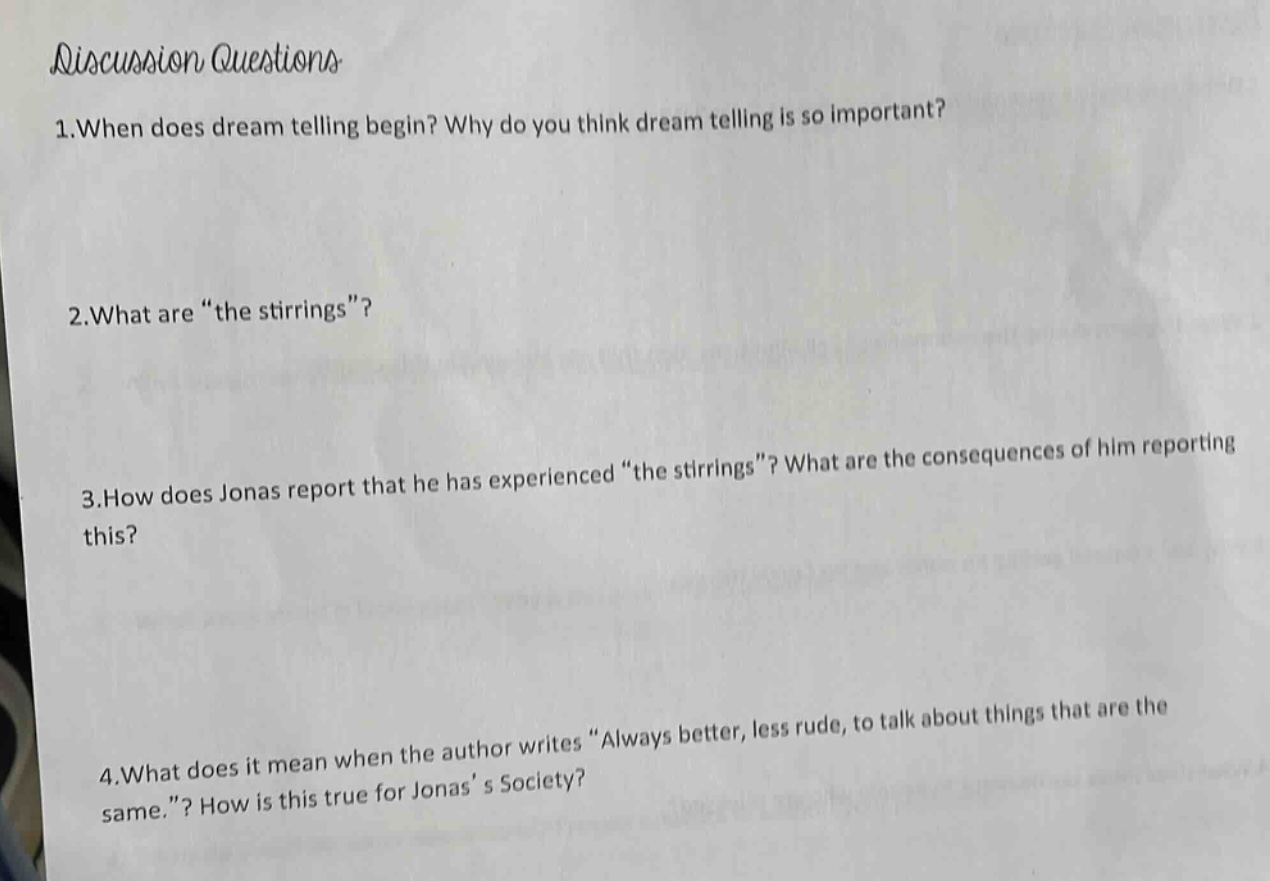
discussion questions\n1.when does dream telling begin? why do you think dream telling is so important?\n2.what are “the stirrings”?\n3.how does jonas report that he has experienced “the stirrings”? what are the consequences of him reporting this?\n4.what does it mean when the author writes “always better, less rude, to talk about things that are the same.”? how is this true for jonas’ s society?
Answer
Brief Explanations:
- Dream - telling often begins in early childhood as a way to communicate inner experiences. It is important as it can help in emotional processing, self - understanding, and social connection.
- "The stirrings" in the context of "The Giver" are early signs of sexual feelings that the community suppresses.
- Jonas reports the stirrings to his parents as required by the community's rules. The consequence is that he is given a pill to suppress the feelings.
- In Jonas' society, talking about things that are the same promotes sameness and conformity, reducing individuality and potential conflict.
Answer:
- Dream - telling often starts in early childhood. It's important for emotional processing and social connection.
- They are early sexual feelings that the community suppresses.
- He reports to his parents. He is given a pill to suppress the feelings.
- It means promoting sameness and conformity in Jonas' society.