document a\nthis concern about excessive prescription is certainly legitimate. however, a close look at the…
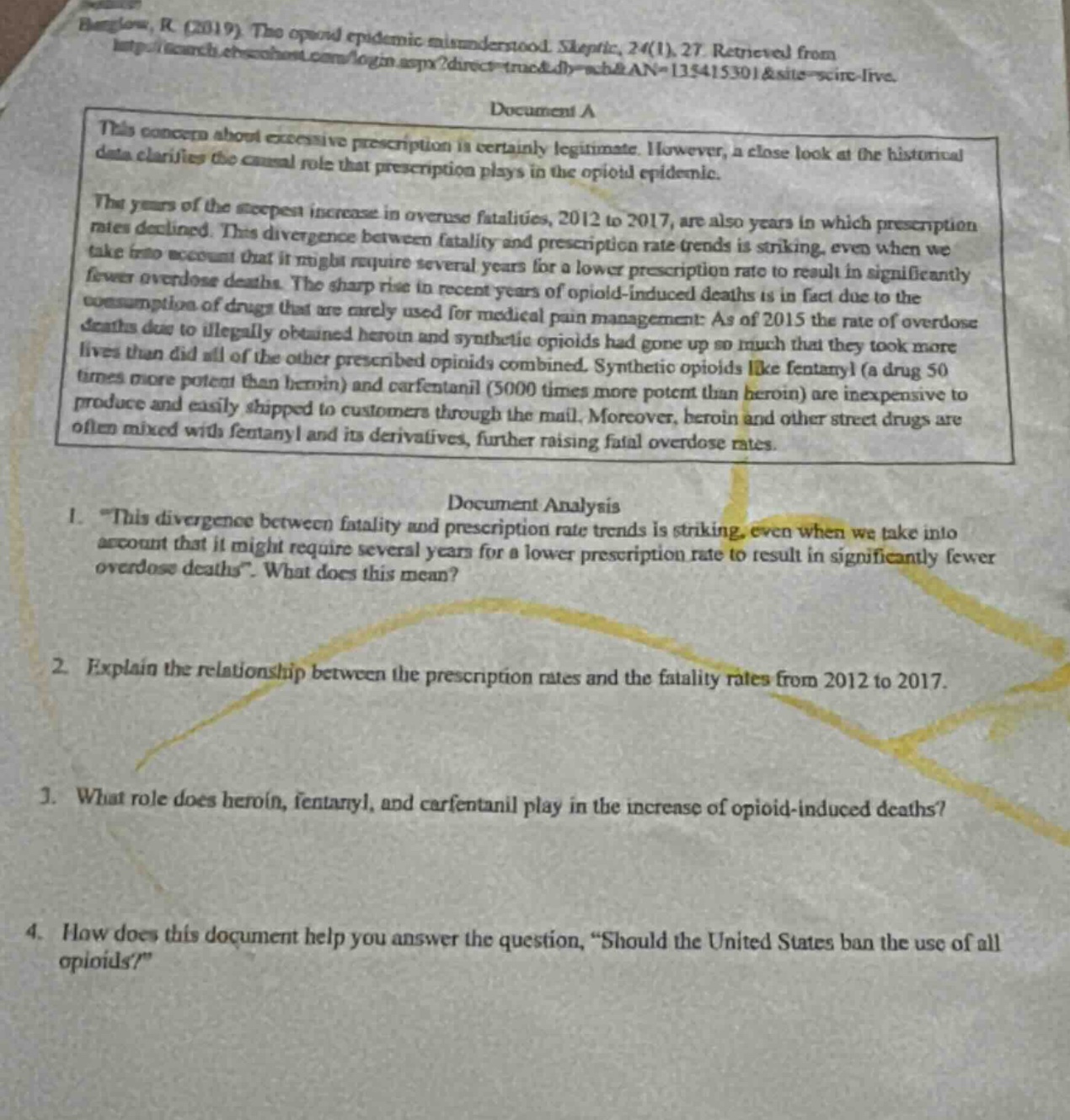
document a\nthis concern about excessive prescription is certainly legitimate. however, a close look at the historical data clarifies the causal role that prescription plays in the opioid epidemic.\nthe years of the steepest increase in overdose fatalities, 2012 to 2017, are also years in which prescription rates declined. this divergence between fatality and prescription rate trends is striking, even when we take into account that it might require several years for a lower prescription rate to result in significantly fewer overdose deaths. the sharp rise in recent years of opioid - induced deaths is in fact due to the consumption of drugs that are rarely used for medical pain management: as of 2015 the rate of overdose deaths due to illegally obtained heroin and synthetic opioids had gone up so much that they took more lives than did all of the other prescribed opioids combined. synthetic opioids like fentanyl (a drug 50 times more potent than heroin) and carfentanil (5000 times more potent than heroin) are inexpensive to produce and easily shipped to customers through the mail. moreover, heroin and other street drugs are often mixed with fentanyl and its derivatives, further raising fatal overdose rates.\ndocument analysis\n1. “this divergence between fatality and prescription rate trends is striking, even when we take into account that it might require several years for a lower prescription rate to result in significantly fewer overdose deaths”. what does this mean?\n2. explain the relationship between the prescription rates and the fatality rates from 2012 to 2017.\n3. what role does heroin, fentanyl, and carfentanil play in the increase of opioid - induced deaths?\n4. how does this document help you answer the question, “should the united states ban the use of all opioids?”
Answer
Brief Explanations:
- It means that despite the time - lag expected for lower prescription rates to reduce overdose deaths, the fact that fatality rates increased while prescription rates declined is still remarkable.
- From 2012 - 2017, prescription rates declined while fatality rates increased, showing a divergence. This indicates that factors other than prescription rates were driving the increase in opioid - related deaths.
- Heroin, fentanyl, and carfentanil play a major role. Heroin is illegally obtained, and synthetic opioids like fentanyl and carfentanil are highly potent, inexpensive to produce, and easily shipped. They are also often mixed with other street drugs, raising fatal overdose rates.
- The document shows that the increase in opioid - induced deaths is mainly due to illegal and synthetic opioids rather than prescribed opioids. This suggests that a blanket ban on all opioids may not be the best solution as it could impact legitimate medical pain management, while the real problem lies in controlling illegal and synthetic opioids.
Answer:
- Despite expected time - lag for lower prescription rates to reduce deaths, the divergence is notable.
- Prescription rates declined while fatality rates increased, indicating other factors at play.
- They are highly potent, illegal or easily - produced synthetic drugs that raise overdose rates.
- It shows illegal/synthetic opioids are main issue, suggesting a blanket ban may not be best.