explain what a p - value is. what is the criterion for rejecting the null hypothesis using the p - value…
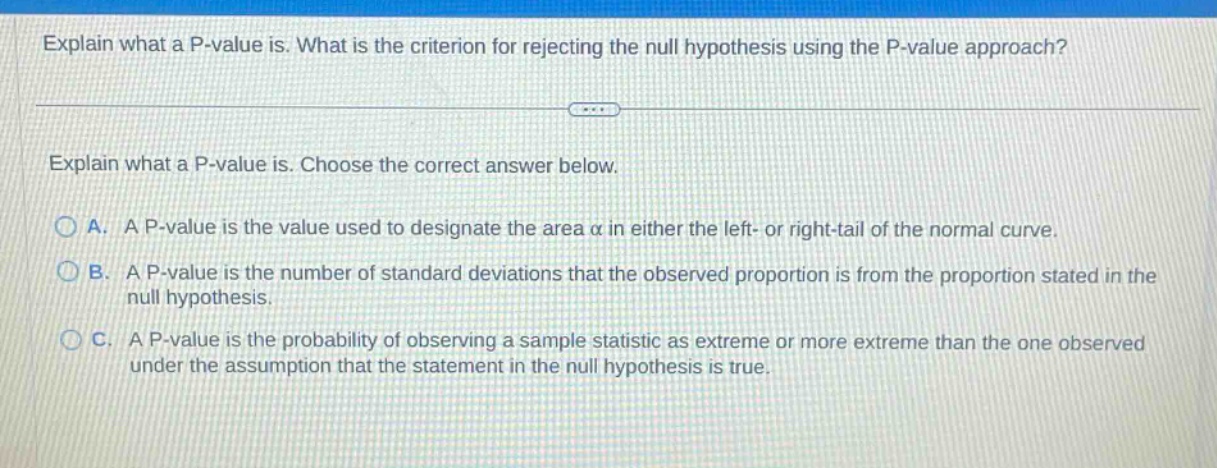
explain what a p - value is. what is the criterion for rejecting the null hypothesis using the p - value approach? explain what a p - value is. choose the correct answer below. a. a p - value is the value used to designate the area α in either the left - or right - tail of the normal curve. b. a p - value is the number of standard deviations that the observed proportion is from the proportion stated in the null hypothesis. c. a p - value is the probability of observing a sample statistic as extreme or more extreme than the one observed under the assumption that the statement in the null hypothesis is true.
Answer
Brief Explanations:
The P - value is a key concept in hypothesis testing. It measures the likelihood of getting a result as extreme or more extreme than the observed one, assuming the null hypothesis is true. The criterion for rejecting the null hypothesis is if the P - value is less than or equal to the significance level (α). Option C correctly defines the P - value.
Answer:
C. A P - value is the probability of observing a sample statistic as extreme or more extreme than the one observed under the assumption that the statement in the null hypothesis is true.