a federally funded research study involving children 8 to 12 years old involves collecting a single voided…
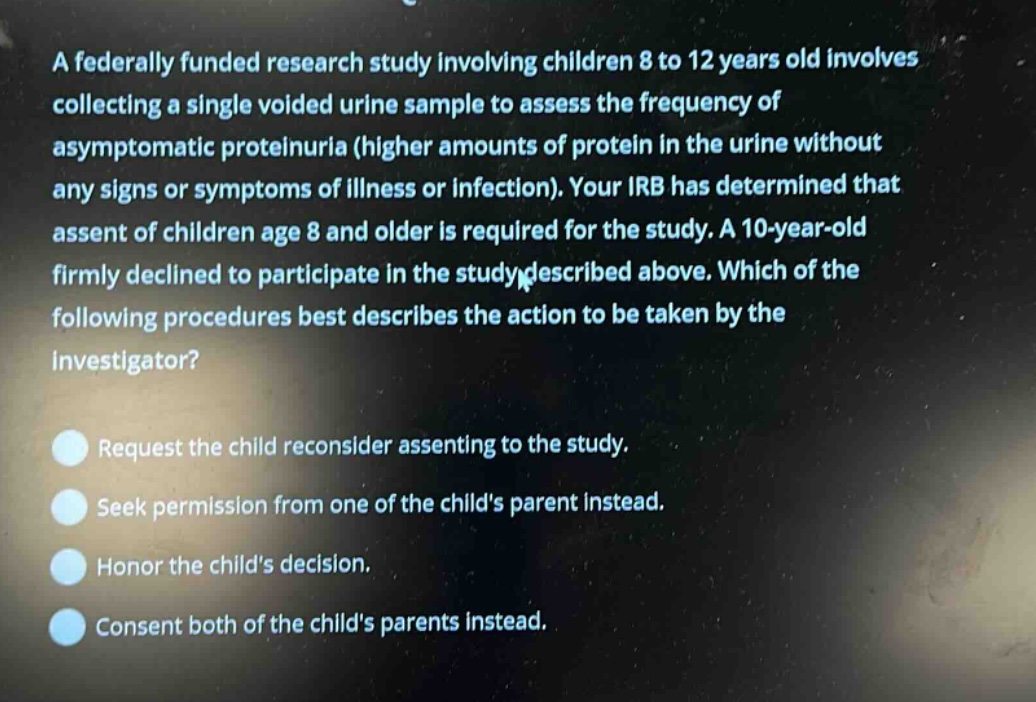
a federally funded research study involving children 8 to 12 years old involves collecting a single voided urine sample to assess the frequency of asymptomatic proteinuria (higher amounts of protein in the urine without any signs or symptoms of illness or infection). your irb has determined that assent of children age 8 and older is required for the study. a 10 - year - old firmly declined to participate in the study described above. which of the following procedures best describes the action to be taken by the investigator? request the child reconsider assenting to the study. seek permission from one of the childs parent instead. honor the childs decision. consent both of the childs parents instead.
Answer
Brief Explanations:
Since the IRB has determined that assent of children age 8 and older is required and the 10 - year - old has firmly declined, ethical research practices demand respecting the child's decision. Pressuring the child to reconsider, seeking parental permission instead when the child has already declined, or consenting both parents instead goes against the requirement of child assent.
Answer:
Honor the child's decision.