which of the following is true of a syllogism? select all that apply. the second premise is an example. it…
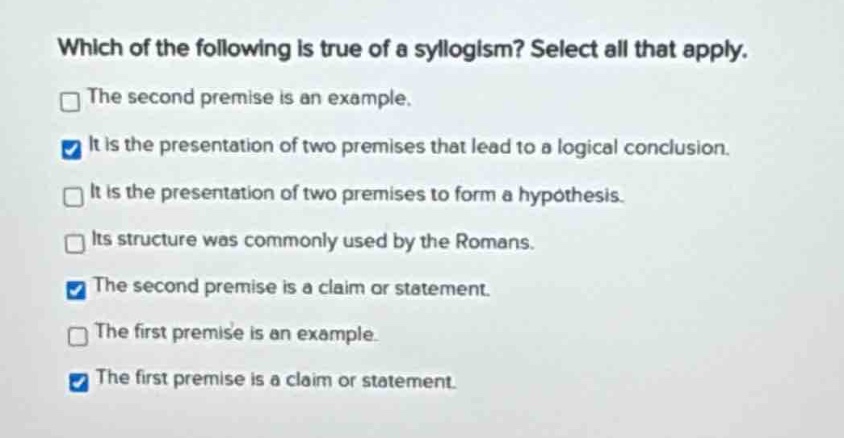
which of the following is true of a syllogism? select all that apply. the second premise is an example. it is the presentation of two premises that lead to a logical conclusion. it is the presentation of two premises to form a hypothesis. its structure was commonly used by the romans. the second premise is a claim or statement. the first premise is an example. the first premise is a claim or statement.
Answer
Brief Explanations:
A syllogism presents two premises (claims or statements) to reach a logical conclusion. The premises are not examples and its structure was not commonly used by the Romans. It is not for forming a hypothesis.
Answer:
It is the presentation of two premises that lead to a logical conclusion. The second premise is a claim or statement. The first premise is a claim or statement.