forty percent of the beads in a bag of more than 10,000 beads are yellow. suzy pulls out 10 beads, one at a…
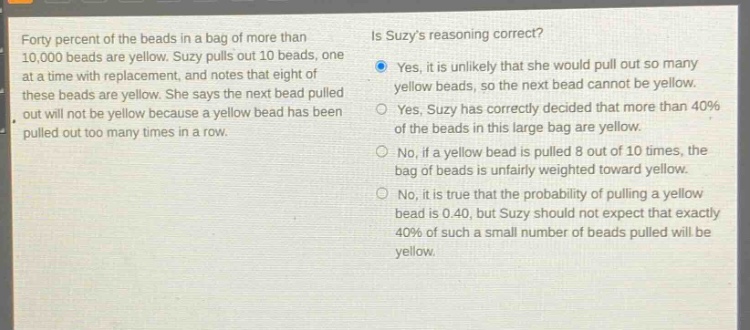
forty percent of the beads in a bag of more than 10,000 beads are yellow. suzy pulls out 10 beads, one at a time with replacement, and notes that eight of these beads are yellow. she says the next bead pulled out will not be yellow because a yellow bead has been pulled out too many times in a row. is suzys reasoning correct? yes, it is unlikely that she would pull out so many yellow beads, so the next bead cannot be yellow. yes, suzy has correctly decided that more than 40% of the beads in this large bag are yellow. no, if a yellow bead is pulled 8 out of 10 times, the bag of beads is unfairly weighted toward yellow. no, it is true that the probability of pulling a yellow bead is 0.40, but suzy should not expect that exactly 40% of such a small number of beads pulled will be yellow.
Answer
Explanation:
Step1: Analyze probability concept
The probability of pulling a yellow bead from the bag is 0.40. Each bead - pulling event is an independent event when done with replacement. Just because 8 out of 10 previous beads were yellow does not change the probability of the next bead - pulling event.
Step2: Evaluate Suzy's reasoning
Suzy expects that the proportion of yellow beads in a small sample of 10 beads should exactly match the proportion in the large population of beads. But in probability, for a small sample size, the observed proportion can deviate from the population proportion.
Answer:
No, it is true that the probability of pulling a yellow bead is 0.40, but Suzy should not expect that exactly 40% of such a small number of beads pulled will be yellow.