1. identify what are the three major kinds of rocks? 2. ccc cause and effect what is the source of energy…
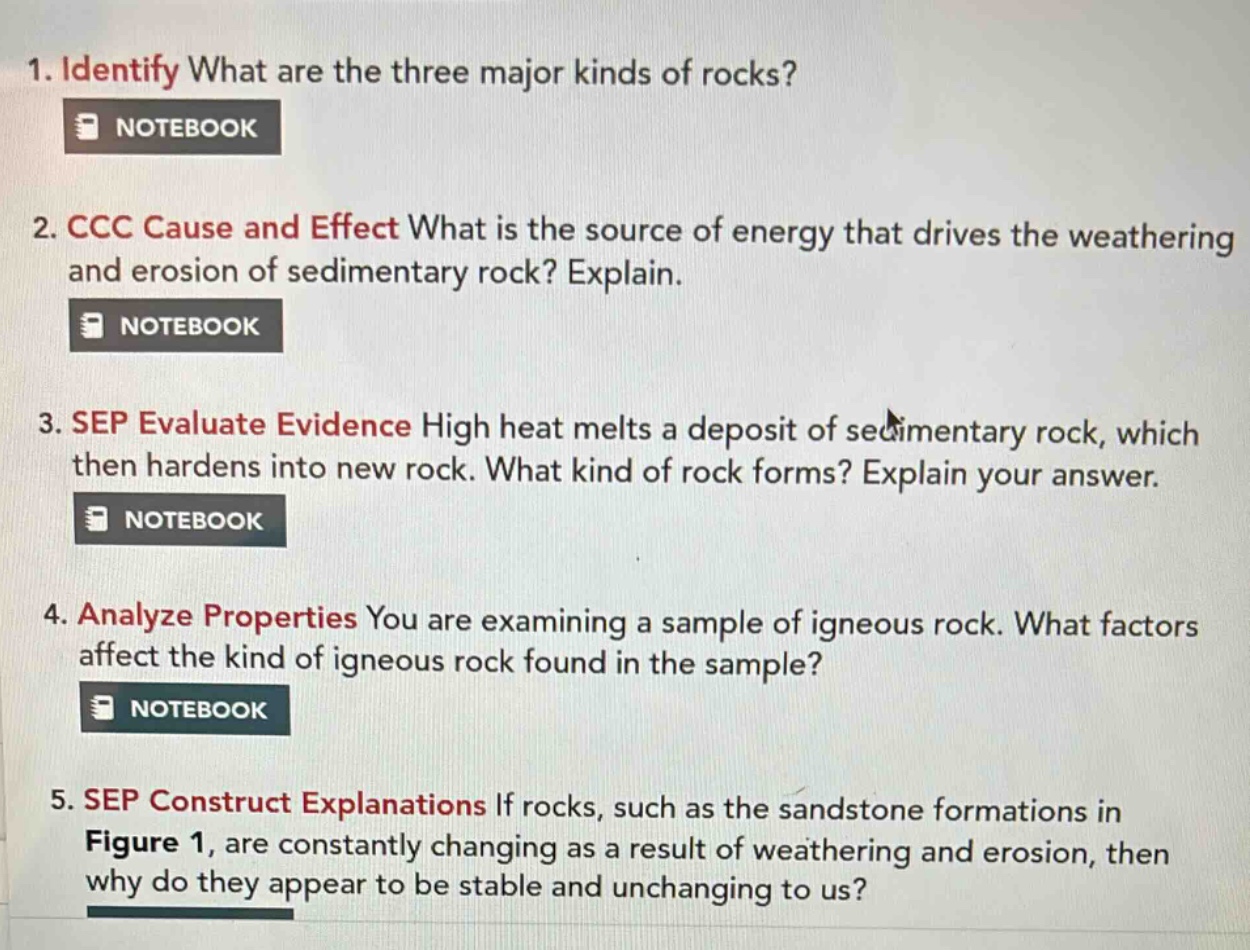
1. identify what are the three major kinds of rocks? 2. ccc cause and effect what is the source of energy that drives the weathering and erosion of sedimentary rock? explain. 3. sep evaluate evidence high heat melts a deposit of sedimentary rock, which then hardens into new rock. what kind of rock forms? explain your answer. 4. analyze properties you are examining a sample of igneous rock. what factors affect the kind of igneous rock found in the sample? 5. sep construct explanations if rocks, such as the sandstone formations in figure 1, are constantly changing as a result of weathering and erosion, then why do they appear to be stable and unchanging to us?
Answer
Brief Explanations:
- The three major kinds of rocks are igneous, sedimentary, and metamorphic rocks. Igneous rocks form from the cooling and solidification of magma or lava. Sedimentary rocks form from the accumulation and compaction of sediments. Metamorphic rocks form from pre - existing rocks that are changed by heat, pressure, and chemical processes.
- The sun is the main source of energy for weathering and erosion of sedimentary rock. Solar energy drives the water cycle, which leads to processes like running water, wind, and ice that cause weathering and erosion.
- When high heat melts a sedimentary rock deposit and it hardens into new rock, an igneous rock forms. This is because the process of melting and then solidifying from a molten state is characteristic of igneous rock formation.
- The factors that affect the kind of igneous rock in a sample include the chemical composition of the magma or lava, the rate of cooling (faster cooling leads to smaller crystals, slower cooling to larger crystals), and the presence of gases in the magma.
- Rocks like sandstone formations appear stable and unchanging to us because the processes of weathering and erosion that change them occur over extremely long geological time - scales. Our human lifespan is very short in comparison, so the changes are not noticeable to us in our daily lives.
Answer:
- Igneous, sedimentary, metamorphic rocks
- The sun. It drives the water cycle which causes weathering and erosion processes.
- Igneous rock. Melting and solidifying from a molten state is igneous rock formation.
- Chemical composition of magma/lava, rate of cooling, presence of gases.
- Weathering and erosion occur over long geological time - scales; our lifespan is short in comparison.