james conducted an experiment with 4 possible outcomes. he determined that the experimental probability of…
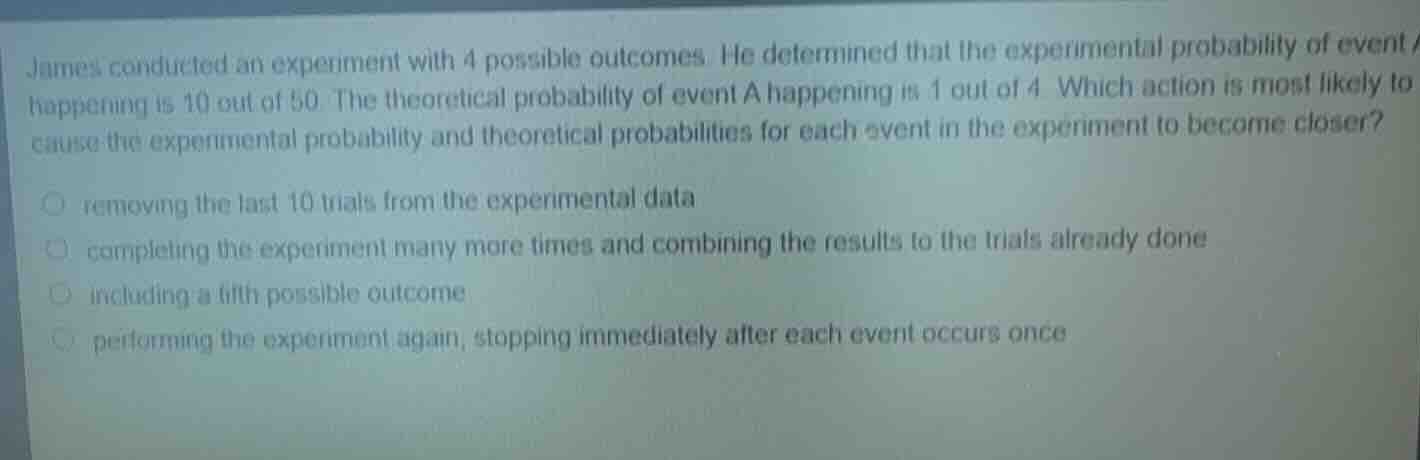
james conducted an experiment with 4 possible outcomes. he determined that the experimental probability of event a happening is 10 out of 50. the theoretical probability of event a happening is 1 out of 4. which action is most likely to cause the experimental probability and theoretical probabilities for each event in the experiment to become closer?- removing the last 10 trials from the experimental data- completing the experiment many more times and combining the results to the trials already done- including a fifth possible outcome- performing the experiment again, stopping immediately after each event occurs once
Answer
Brief Explanations:
The law of large numbers states that as the number of trials in a probability experiment increases, the experimental probability will approach the theoretical probability. Removing trials reduces the sample size, adding an outcome changes the theoretical probabilities entirely, and stopping after each event occurs once keeps the sample size very small. Only increasing the number of trials aligns with this principle.
Answer:
completing the experiment many more times and combining the results to the trials already done