jamie rolls a 6 - sided die 30 times and determines that the experimental probability of rolling a 2 is…
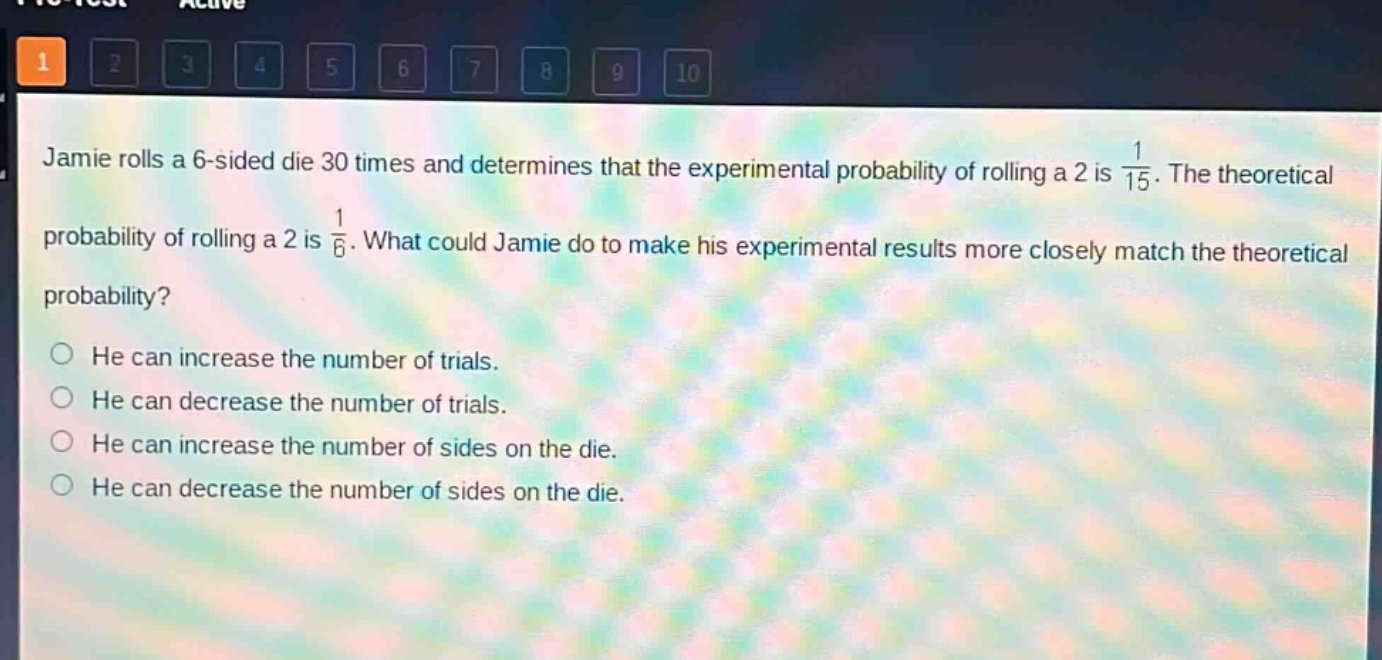
jamie rolls a 6 - sided die 30 times and determines that the experimental probability of rolling a 2 is $\frac{1}{15}$. the theoretical probability of rolling a 2 is $\frac{1}{6}$. what could jamie do to make his experimental results more closely match the theoretical probability? he can increase the number of trials. he can decrease the number of trials. he can increase the number of sides on the die. he can decrease the number of sides on the die.
Answer
Brief Explanations:
The law of large numbers in probability states that as the number of trials in an experiment increases, the experimental probability gets closer to the theoretical probability. So increasing the number of trials will make the experimental results more closely match the theoretical probability.
Answer:
He can increase the number of trials.