the mayor wants to know how the people of the city feel about a bottle tax. she sends her staff to a…
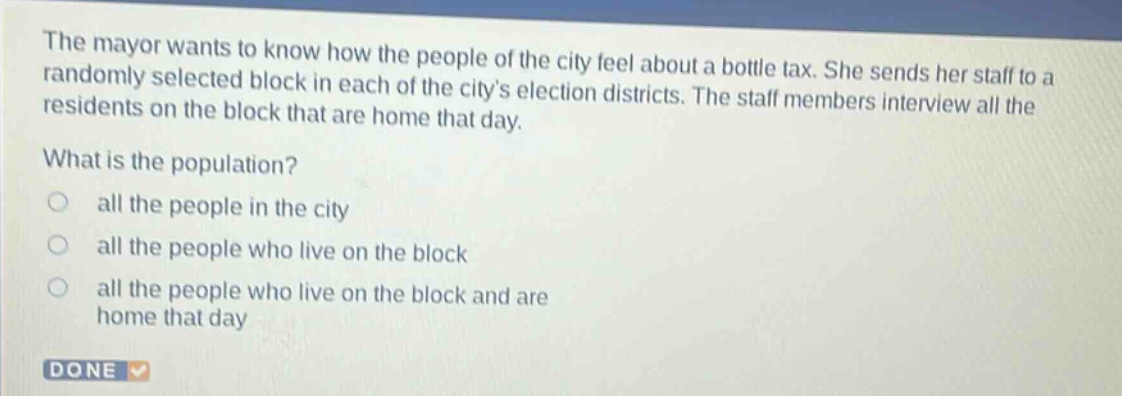
the mayor wants to know how the people of the city feel about a bottle tax. she sends her staff to a randomly selected block in each of the citys election districts. the staff members interview all the residents on the block that are home that day. what is the population? all the people in the city all the people who live on the block all the people who live on the block and are home that day
Answer
Brief Explanations:
In statistics, the population is the entire group of individuals or objects that we are interested in studying. Here, the mayor wants to know the feelings of the people of the city about a bottle tax. So, the entire group of interest is all the people in the city.
- The option "all the people who live on the block" is a sample from the population (since the block is randomly selected from each election district).
- The option "all the people who live on the block and are home that day" is an even more restricted sample (as it further limits by those who are home).
Answer:
all the people in the city