mr. higa places two bins of colored tiles in front of his classroom. each bin contains 200 tiles. he…
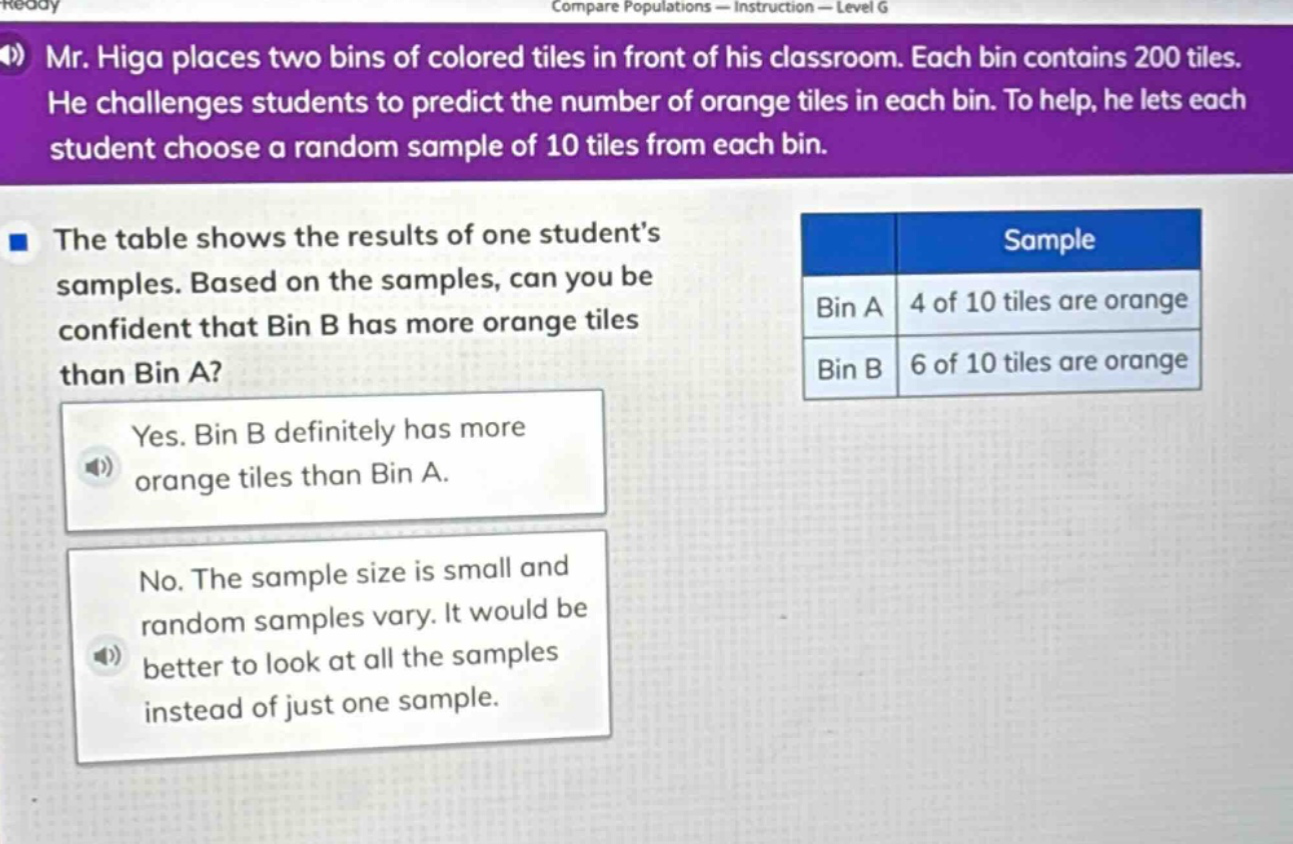
mr. higa places two bins of colored tiles in front of his classroom. each bin contains 200 tiles. he challenges students to predict the number of orange tiles in each bin. to help, he lets each student choose a random sample of 10 tiles from each bin. the table shows the results of one students samples. based on the samples, can you be confident that bin b has more orange tiles than bin a? sample bin a 4 of 10 tiles are orange bin b 6 of 10 tiles are orange yes. bin b definitely has more orange tiles than bin a. no. the sample size is small and random samples vary. it would be better to look at all the samples instead of just one sample.
Answer
Explanation:
Step1: Analyze sample - size concept
The sample size of 10 tiles from each bin of 200 tiles is small.
Step2: Consider sample variability
Random samples can vary greatly. One - sample result may not be representative.
Answer:
No. The sample size is small and random samples vary. It would be better to look at all the samples instead of just one sample.