mrs. liang, the librarian, wants to compare the numbers of patrons who prefer e - books to paperback books…
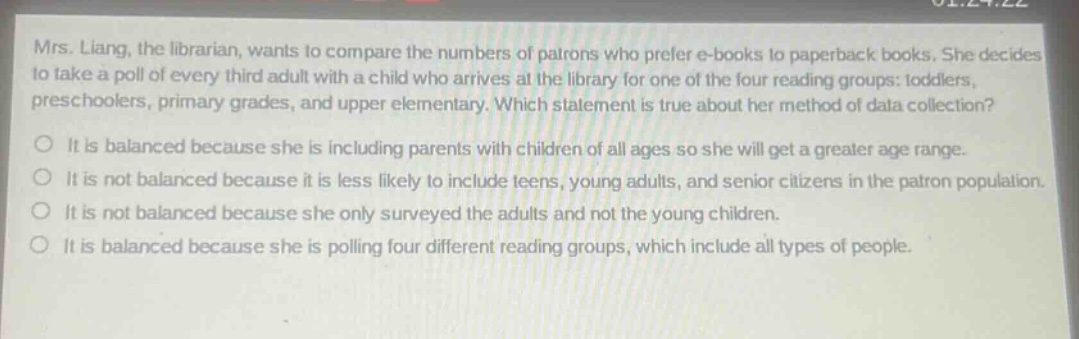
mrs. liang, the librarian, wants to compare the numbers of patrons who prefer e - books to paperback books. she decides to take a poll of every third adult with a child who arrives at the library for one of the four reading groups: toddlers, preschoolers, primary grades, and upper elementary. which statement is true about her method of data collection? it is balanced because she is including parents with children of all ages so she will get a greater age range. it is not balanced because it is less likely to include teens, young adults, and senior citizens in the patron population. it is not balanced because she only surveyed the adults and not the young children. it is balanced because she is polling four different reading groups, which include all types of people.
Answer
Brief Explanations:
She only surveys adults with children for four reading - groups. This excludes teens, young adults, and senior citizens, so the sample is not representative of the entire patron population.
Answer:
It is not balanced because it is less likely to include teens, young adults, and senior citizens in the patron population.