the number of times a player has golfed in ones lifetime is compared to the number of strokes it takes the…
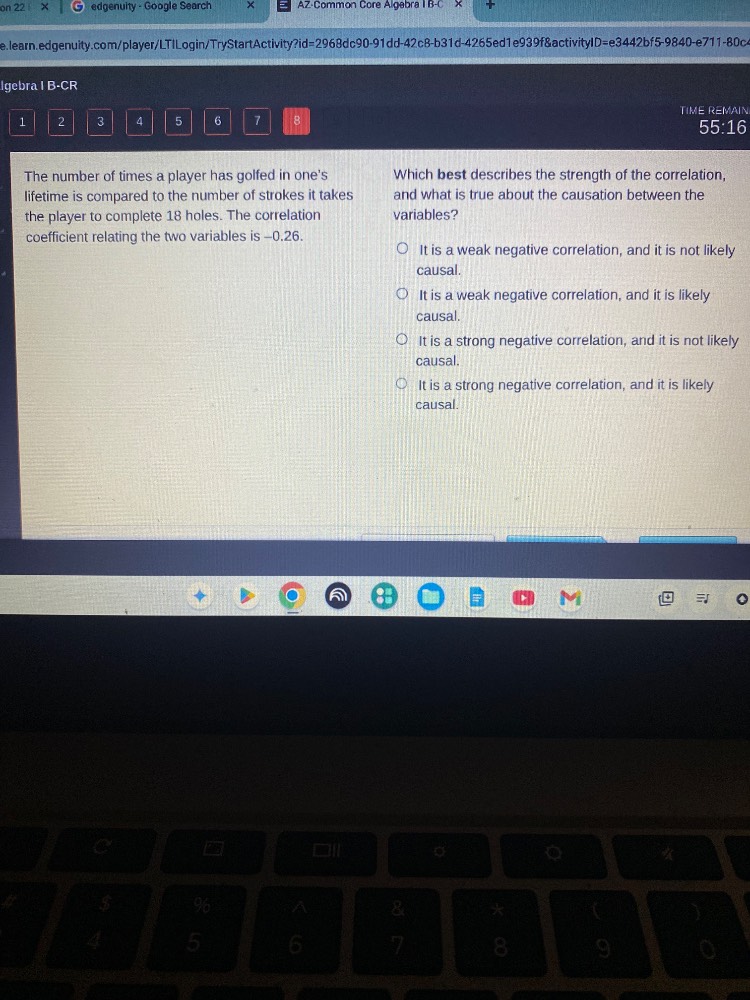
the number of times a player has golfed in ones lifetime is compared to the number of strokes it takes the player to complete 18 holes. the correlation coefficient relating the two variables is -0.26.\nwhich best describes the strength of the correlation, and what is true about the causation between the variables?\n○ it is a weak negative correlation, and it is not likely causal.\n○ it is a weak negative correlation, and it is likely causal.\n○ it is a strong negative correlation, and it is not likely causal.\n○ it is a strong negative correlation, and it is likely causal.
Answer
Brief Explanations:
Correlation coefficients range from -1 to 1. Values close to 0 indicate a weak correlation; -0.26 is near 0, so it is a weak negative correlation. More lifetime golfing likely improves skill, reducing strokes, so the relationship is likely causal.
Answer:
It is a weak negative correlation, and it is likely causal.