which scenario represents a sample in which randomization is correctly used?\na. viewers of a political talk…
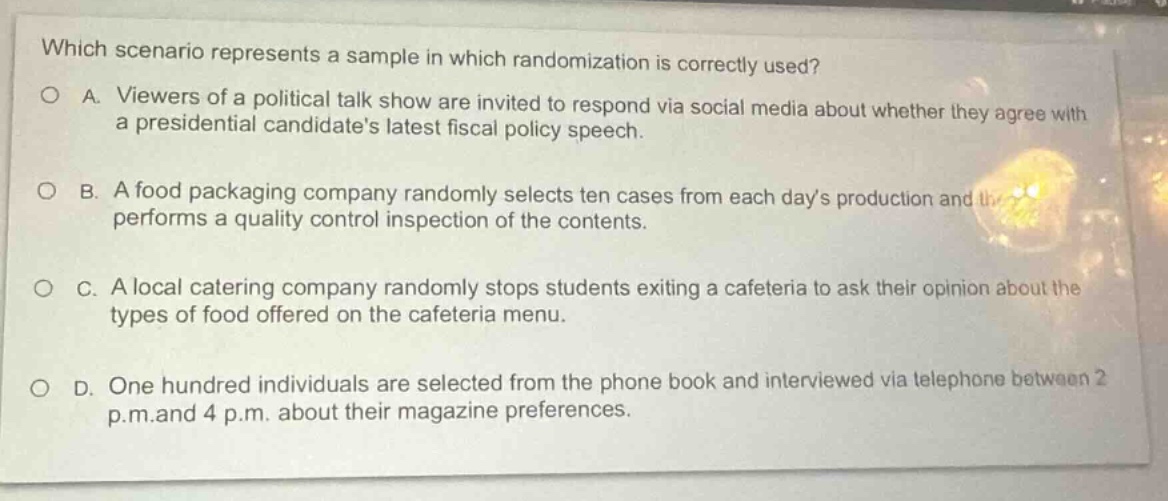
which scenario represents a sample in which randomization is correctly used?\na. viewers of a political talk show are invited to respond via social media about whether they agree with a presidential candidates latest fiscal policy speech.\nb. a food packaging company randomly selects ten cases from each days production and performs a quality control inspection of the contents.\nc. a local catering company randomly stops students exiting a cafeteria to ask their opinion about the types of food offered on the cafeteria menu.\nd. one hundred individuals are selected from the phone book and interviewed via telephone between 2 p.m. and 4 p.m. about their magazine preferences.
Answer
Brief Explanations:
- For option A: Viewers of a political talk - show who respond via social media are likely self - selected. People with stronger opinions are more likely to respond, so it's not a randomly selected sample.
- For option B: A food packaging company randomly selecting ten cases from each day's production for quality control inspection is a proper use of randomization. Each case has an equal chance of being selected for inspection.
- For option C: Students exiting a cafeteria may not be a representative sample of all students (e.g., only those who use the cafeteria are surveyed, and the time of day may affect who is there).
- For option D: Selecting individuals from the phone book and interviewing them between 2 p.m. and 4 p.m. may bias the sample as not everyone is available during that time, and not everyone is in the phone book.
Answer:
B. A food packaging company randomly selects ten cases from each day's production and performs a quality control inspection of the contents.