which situation best describes why an experimental probability would be different than theoretical?\na the…
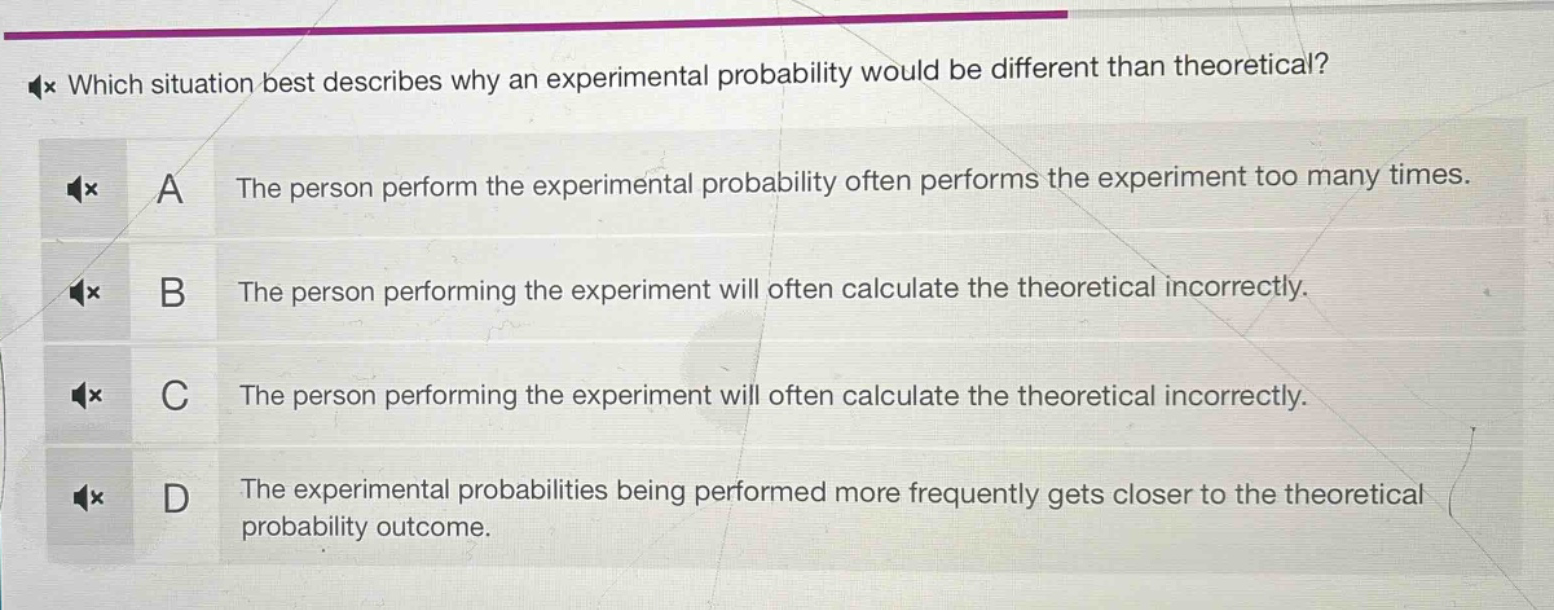
which situation best describes why an experimental probability would be different than theoretical?\na the person perform the experimental probability often performs the experiment too many times.\nb the person performing the experiment will often calculate the theoretical incorrectly.\nc the person performing the experiment will often calculate the theoretical incorrectly.\nd the experimental probabilities being performed more frequently gets closer to the theoretical probability outcome.
Answer
Brief Explanations:
Experimental probability is based on actual trials, and as the number of trials increases, it approaches the theoretical probability. Option D correctly states that more - frequent performance of experimental probabilities gets closer to the theoretical probability outcome, which implies that in fewer trials (or in general, before reaching a large - number of trials), they can differ. Options A, B, and C are incorrect as performing the experiment too many times doesn't cause the difference, and incorrect calculation of theoretical probability is not the main reason for the difference between experimental and theoretical probabilities.
Answer:
D. The experimental probabilities being performed more frequently gets closer to the theoretical probability outcome.