source: kolodny, k. (2017). preventing driving health response to opioid epidemic. nations health, 47(9), 1…
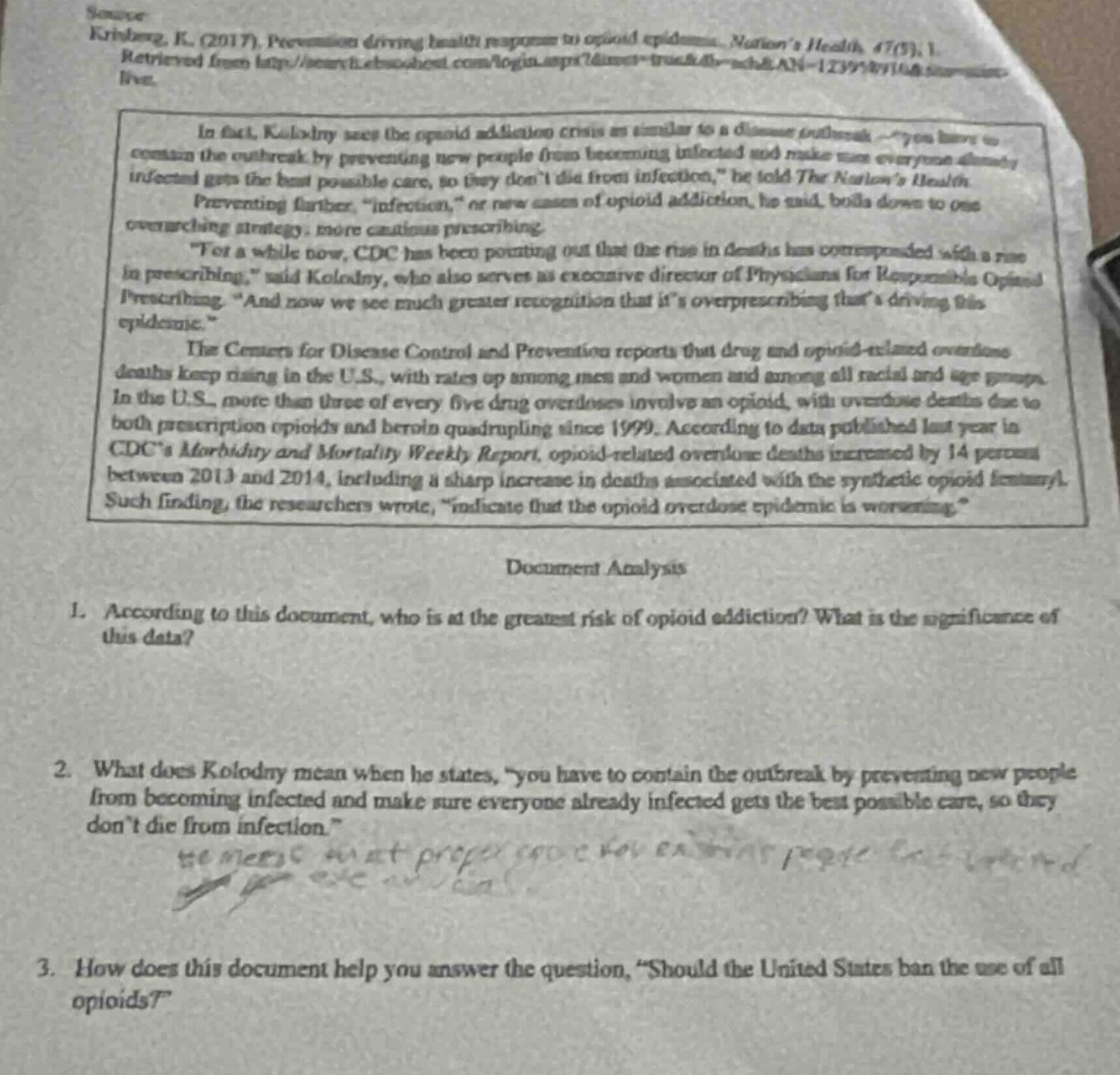
source: kolodny, k. (2017). preventing driving health response to opioid epidemic. nations health, 47(9), 1. retrieved from http://search.ebscohost.com/login.aspx?direct=true&db=a9h&an=123978104&site=ehost - live. in fact, kolodny sees the opioid addiction crisis as similar to a disease outbreak - “you have to contain the outbreak by preventing new people from becoming infected and make sure everyone already infected gets the best possible care, so they dont die from infection,” he told the nations health. preventing further, “infection,” or new cases of opioid addiction, he said, boils down to one overarching strategy: more cautious prescribing. “for a while now, cdc has been pointing out that the rise in deaths has corresponded with a rise in prescribing,” said kolodny, who also serves as executive director of physicians for responsible opioid prescribing. “and now we see much greater recognition that its over - prescribing thats driving this epidemic.” the centers for disease control and prevention reports that drug and opioid - related overdose deaths keep rising in the u.s., with rates up among men and women and among all racial and age groups. in the u.s., more than three of every five drug overdoses involve an opioid, with overdose deaths due to both prescription opioids and heroin quadrupling since 1999. according to data published last year in cdcs morbidity and mortality weekly report, opioid - related overdose deaths increased by 14 percent between 2013 and 2014, including a sharp increase in deaths associated with the synthetic opioid fentanyl. such findings, the researchers wrote, “indicate that the opioid overdose epidemic is worsening.” document analysis 1. according to this document, who is at the greatest risk of opioid addiction? what is the significance of this data? 2. what does kolodny mean when he states, “you have to contain the outbreak by preventing new people from becoming infected and make sure everyone already infected gets the best possible care, so they dont die from infection.” 3. how does this document help you answer the question, “should the united states ban the use of all opioids?”
Answer
Brief Explanations:
- The document doesn't specify who is at greatest risk. It emphasizes the rising opioid - related overdose deaths across all races, genders, and age groups, highlighting the severity of the epidemic.
- Kolodny uses an infectious - disease metaphor. He means that to combat the opioid addiction crisis, new cases need to be prevented (like new infections) and those already addicted need proper care to avoid death (like treating the infected to prevent death from the disease).
- The document shows the severity of the opioid - related overdose problem due to overprescribing. However, it doesn't directly answer whether all opioids should be banned. It provides evidence of the problem but doesn't consider potential medical uses of opioids.
Answer:
- The document doesn't identify a specific high - risk group. The significance of the data is to show the widespread and increasing nature of the opioid epidemic.
- He is suggesting a two - pronged approach to the opioid addiction crisis similar to handling an infectious disease: prevention of new cases and proper care for existing cases.
- It shows the severity of the opioid - related overdose problem from overprescribing but doesn't directly answer the question about banning all opioids.