a tire company wants to determine if tires made with a new type of tread will last longer than the tires…
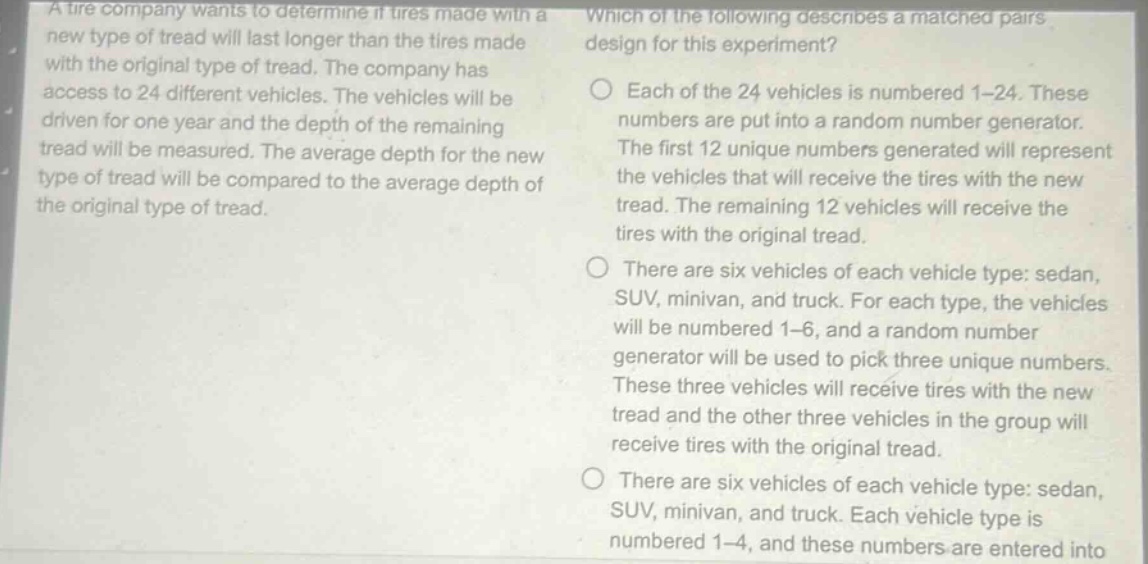
a tire company wants to determine if tires made with a new type of tread will last longer than the tires made with the original type of tread. the company has access to 24 different vehicles. the vehicles will be driven for one year and the depth of the remaining tread will be measured. the average depth for the new type of tread will be compared to the average depth of the original type of tread. which of the following describes a matched - pairs design for this experiment? each of the 24 vehicles is numbered 1 - 24. these numbers are put into a random number generator. the first 12 unique numbers generated will represent the vehicles that will receive the tires with the new tread. the remaining 12 vehicles will receive the tires with the original tread. there are six vehicles of each vehicle type: sedan, suv, minivan, and truck. for each type, the vehicles will be numbered 1 - 6, and a random number generator will be used to pick three unique numbers. these three vehicles will receive tires with the new tread and the other three vehicles in the group will receive tires with the original tread. there are six vehicles of each vehicle type: sedan, suv, minivan, and truck. each vehicle type is numbered 1 - 4, and these numbers are entered into
Answer
Brief Explanations:
In a matched - pairs design, we pair similar experimental units. Here, vehicles of the same type are similar. By splitting vehicles of each type into two groups (one with new tread and one with original tread), we create pairs based on vehicle type. This helps control for variability due to vehicle type.
Answer:
There are six vehicles of each vehicle type: sedan, SUV, minivan, and truck. For each type, the vehicles will be numbered 1 - 6, and a random number generator will be used to pick three unique numbers. These three vehicles will receive tires with the new tread and the other three vehicles in the group will receive tires with the original tread.