a wildlife researcher weighed all the raccoons that were trapped in suburban neighborhoods before they were…
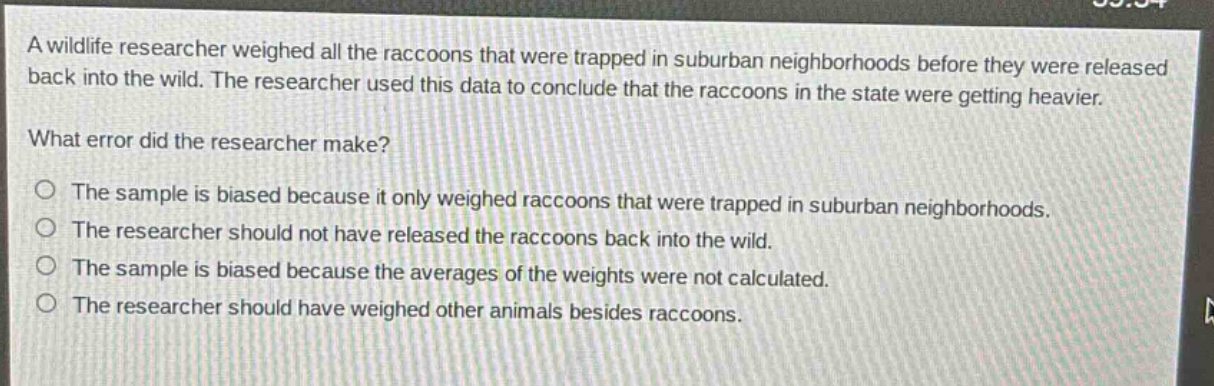
a wildlife researcher weighed all the raccoons that were trapped in suburban neighborhoods before they were released back into the wild. the researcher used this data to conclude that the raccoons in the state were getting heavier.\nwhat error did the researcher make?\no the sample is biased because it only weighed raccoons that were trapped in suburban neighborhoods.\no the researcher should not have released the raccoons back into the wild.\no the sample is biased because the averages of the weights were not calculated.\no the researcher should have weighed other animals besides raccoons.
Answer
Brief Explanations:
The researcher's sample only includes raccoons from suburban neighborhoods, not representing all raccoons in the state. This leads to a biased sample.
Answer:
The sample is biased because it only weighed raccoons that were trapped in suburban neighborhoods.