the following paragraphs may or may not be in the most logical order. each paragraph is numbered in…
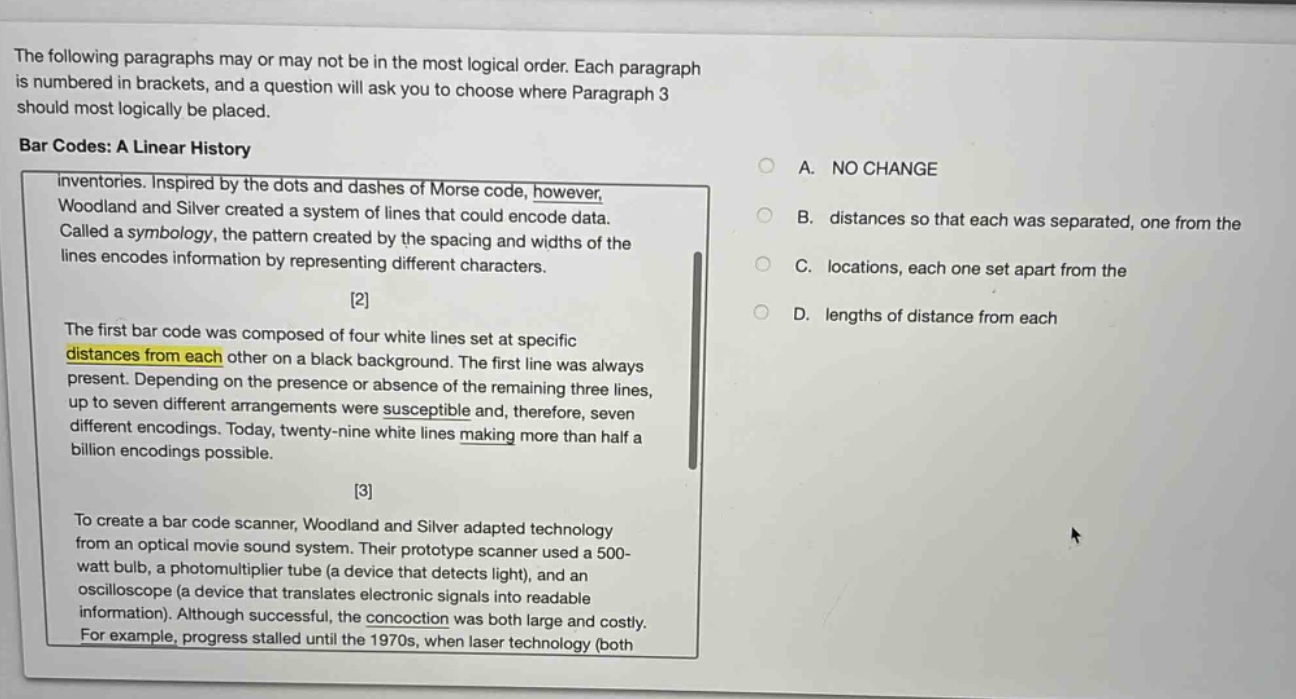
the following paragraphs may or may not be in the most logical order. each paragraph is numbered in brackets, and a question will ask you to choose where paragraph 3 should most logically be placed. bar codes: a linear history inventories. inspired by the dots and dashes of morse code, however, woodland and silver created a system of lines that could encode data. called a symbology, the pattern created by the spacing and widths of the lines encodes information by representing different characters. 2 the first bar code was composed of four white lines set at specific distances from each other on a black background. the first line was always present. depending on the presence or absence of the remaining three lines, up to seven different arrangements were susceptible and, therefore, seven different encodings. today, twenty - nine white lines making more than half a billion encodings possible. 3 to create a bar code scanner, woodland and silver adapted technology from an optical movie sound system. their prototype scanner used a 500 - watt bulb, a photomultiplier tube (a device that detects light), and an oscilloscope (a device that translates electronic signals into readable information). although successful, the concoction was both large and costly. for example, progress stalled until the 1970s, when laser technology (both a. no change b. distances so that each was separated, one from the c. locations, each one set apart from the d. lengths of distance from each
Answer
Brief Explanations:
The passage first introduces the creation of bar - code symbology, then the first bar - code structure, and then the creation of the bar - code scanner. Paragraph 3 about creating the scanner should follow the description of the first bar - code in Paragraph 2.
Answer:
A. NO CHANGE