handicrafts\nbefore the industrial revolution, everything was made by hand. an extraordinary amount of care…
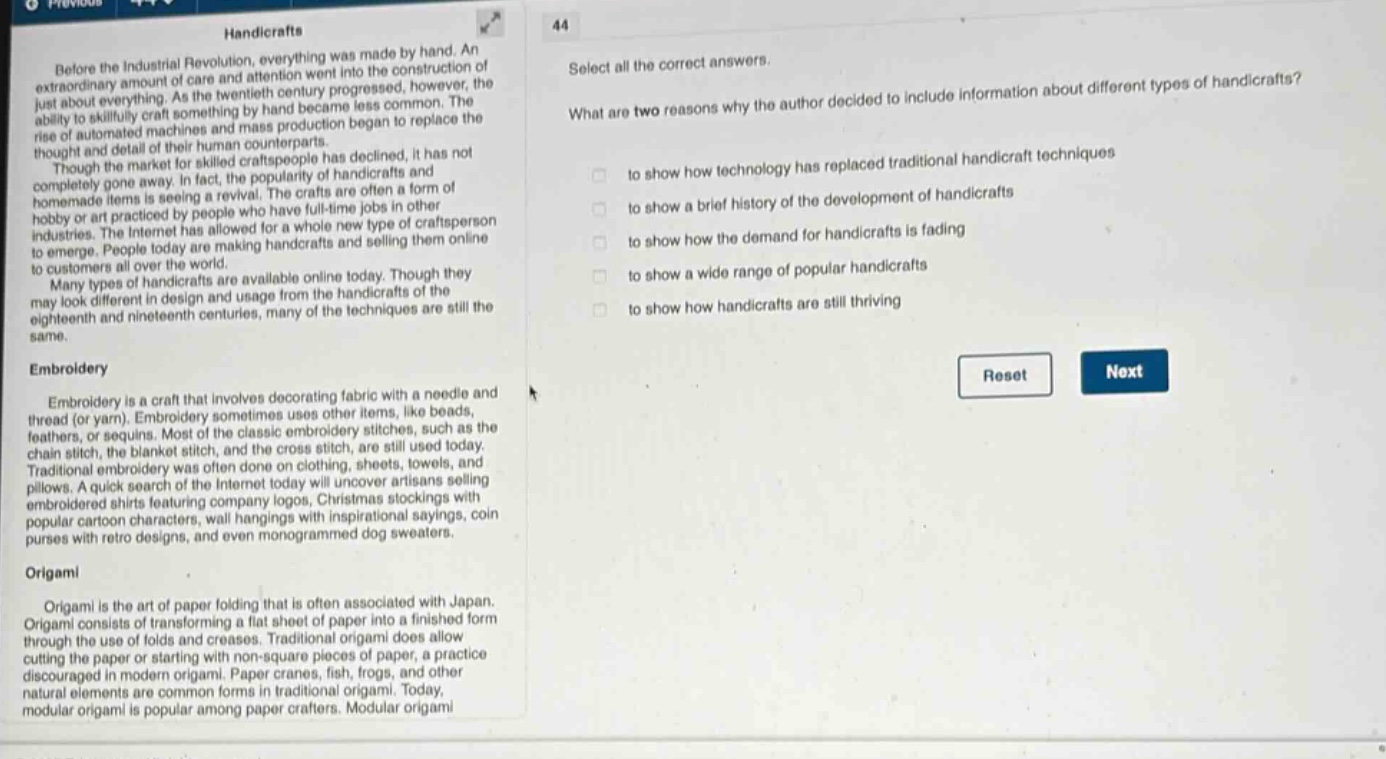
handicrafts\nbefore the industrial revolution, everything was made by hand. an extraordinary amount of care and attention went into the construction of just about anything. as the twentieth century progressed, however, the ability to skillfully craft something by hand became less common. the rise of automated machines and mass production began to replace the thought and detail of their human counterparts.\nthough the market for skilled craftspeople has declined, it has not completely gone away. in fact, the popularity of handicrafts and homemade items is seeing a revival. the crafts are often a form of hobby or art practiced by people who have full - time jobs in other industries. the internet has allowed for a whole new type of craftsperon to emerge. people today are making handicrafts and selling them online to customers all over the world.\nmany types of handicrafts are available today. though they may look different in design and usage from the handicrafts of the eighteenth and nineteenth centuries, many of the techniques are still the same.\nembroidery\nembroidery is a craft that involves decorating fabric with a needle and thread (or yarn). embroidery sometimes uses other items, like beads, feathers, or sequins. most of the classic embroidery stitches, such as the chain stitch, the blanket stitch, and the cross stitch, are still used today. traditional embroidery was often done on clothing, sheets, towels, and pillows. a quick search of the internet today will uncover artisans selling embroidered shirts featuring company logos, christmas stockings with popular cartoon characters, wall hangings with inspirational sayings, coin purses with retro designs, and even monogrammed dog sweaters.\norigami\norigami is the art of paper folding that is often associated with japan. origami consists of transforming a flat sheet of paper into a finished form through the use of folds and creases. traditional origami does allow cutting the paper or starting with non - square pieces of paper, a practice discouraged in modern origami. paper cranes, fish, frogs, and other natural elements are common forms in traditional origami. today, modular origami is popular among paper crafters. modular origami\nselect all the correct answers.\nwhat are two reasons why the author decided to include information about different types of handicrafts?\nto show how technology has replaced traditional handicraft techniquesto show a brief history of the development of handicraftsto show how the demand for handicrafts is fadingto show a wide range of popular handicraftsto show how handicrafts are still thriving\nreset next
Answer
Brief Explanations:
The text first shows how technology replaced traditional hand - craft techniques by mentioning the decline of hand - made items with the rise of automated machines. Then it lists different types of handicrafts like embroidery and origami to show a wide range of popular handicrafts. It also implies that handicrafts are still thriving as people are making and selling them online.
Answer:
to show how technology has replaced traditional handicraft techniques to show a wide range of popular handicrafts to show how handicrafts are still thriving