identifying elements of persuasion: mastery test\n2\nselect the correct answer.\njulie is writing a…
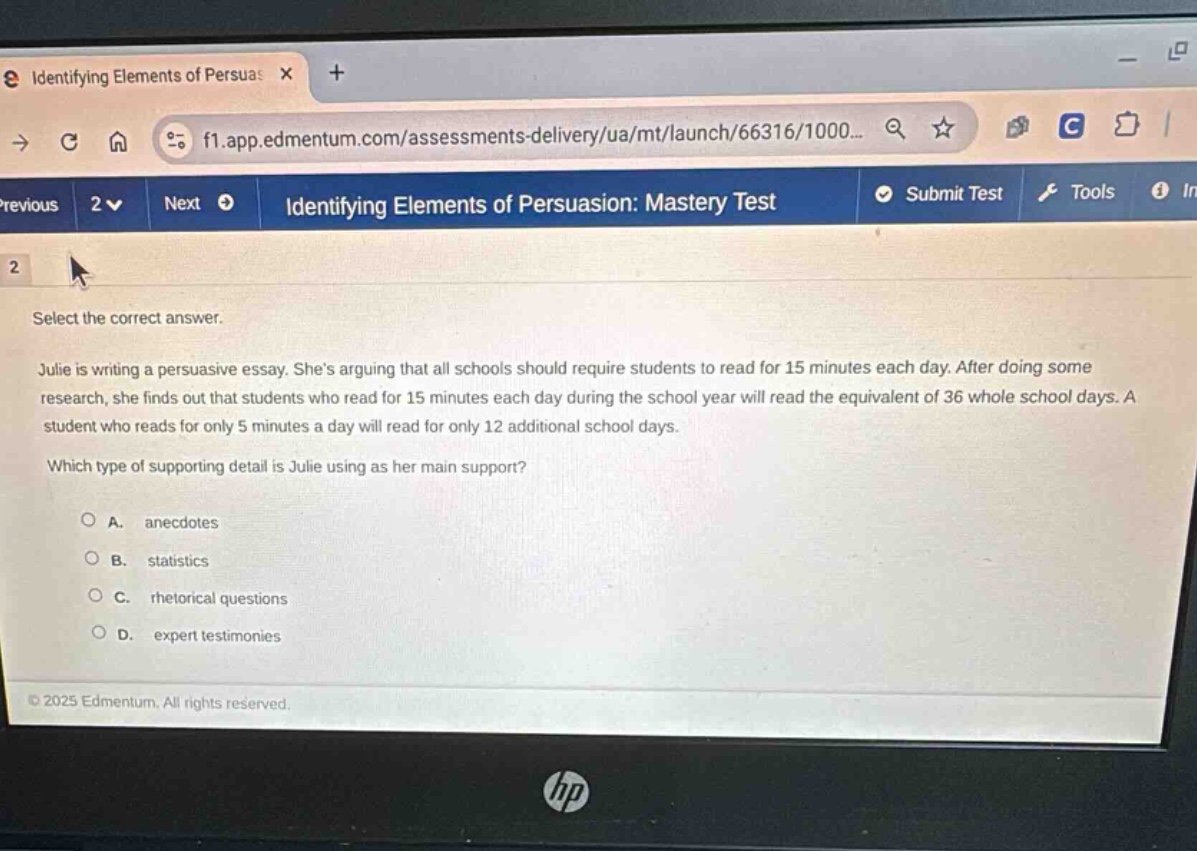
identifying elements of persuasion: mastery test\n2\nselect the correct answer.\njulie is writing a persuasive essay. shes arguing that all schools should require students to read for 15 minutes each day. after doing some research, she finds out that students who read for 15 minutes each day during the school year will read the equivalent of 36 whole school days. a student who reads for only 5 minutes a day will read for only 12 additional school days.\nwhich type of supporting detail is julie using as her main support?\na. anecdotes\nb. statistics\nc. rhetorical questions\nd. expert testimonies
Answer
Brief Explanations:
Julie uses numbers like "36 whole school days" and "12 additional school days" which are statistics to support her argument in the persuasive essay. Anecdotes are personal stories, rhetorical questions are questions used for effect, and expert testimonies are statements from authorities. Here, the key - supporting details are numerical data.
Answer:
B. statistics