mix it up! making varied sentences make a simple sentence: it has one complete thought. it may have multiple…
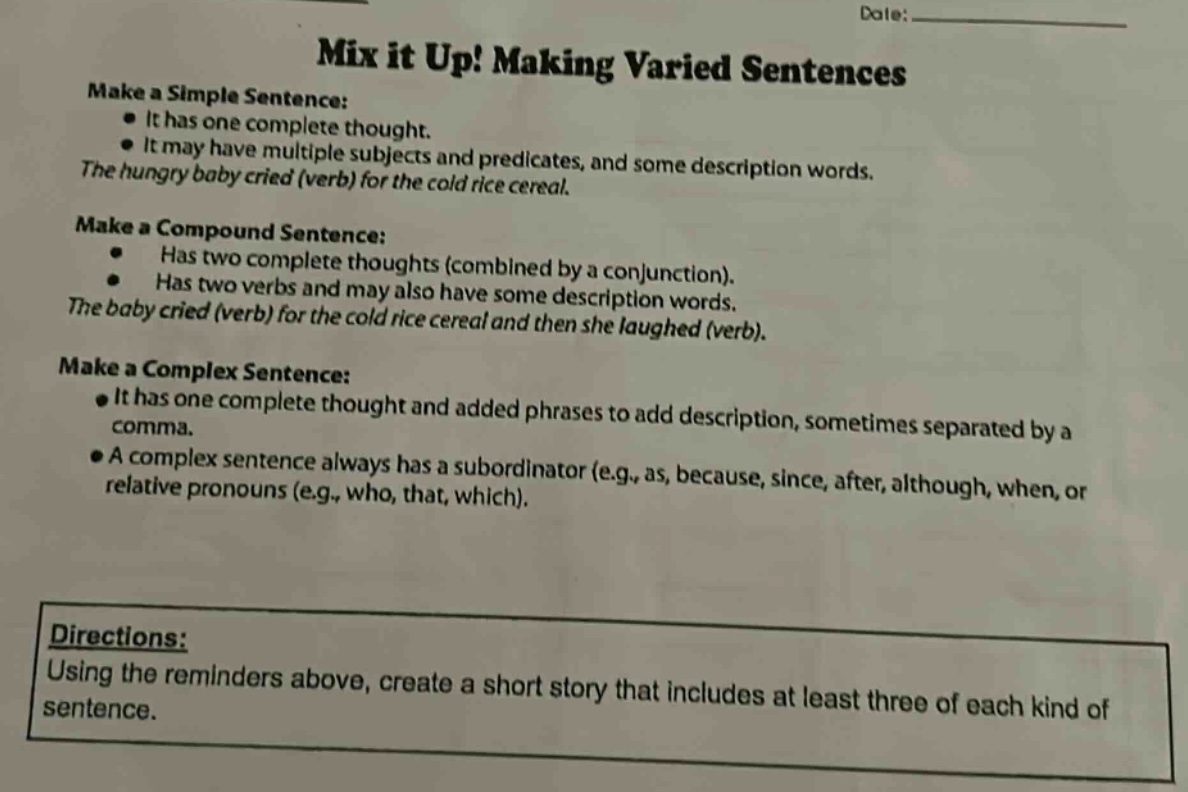
mix it up! making varied sentences make a simple sentence: it has one complete thought. it may have multiple subjects and predicates, and some description words. the hungry baby cried (verb) for the cold rice cereal. make a compound sentence: has two complete thoughts (combined by a conjunction). has two verbs and may also have some description words. the baby cried (verb) for the cold rice cereal and then she laughed (verb). make a complex sentence: it has one complete thought and added phrases to add description, sometimes separated by a comma. a complex sentence always has a subordinator (e.g., as, because, since, after, although, when, or relative pronouns (e.g., who, that, which). directions: using the reminders above, create a short story that includes at least three of each kind of sentence.
Answer
Brief Explanations:
We'll create a short - story using the rules for simple, compound, and complex sentences. Simple sentences have one complete thought, compound sentences have two complete thoughts joined by a conjunction, and complex sentences have one main thought with added descriptive phrases and a subordinator or relative pronoun.
Answer:
The sun shone brightly. The birds chirped merrily. The flowers bloomed beautifully. (Simple sentences) The wind blew and the leaves danced, and then the clouds gathered. (Compound sentences) Although it started to rain, the children played in the puddles because they loved the water. When the rain stopped, they built sandcastles in the wet sand. Since the sun came out again, they dried off quickly. (Complex sentences)