1. what provides the foundation for understanding the central message of a text?\n a. tone\n b. context…
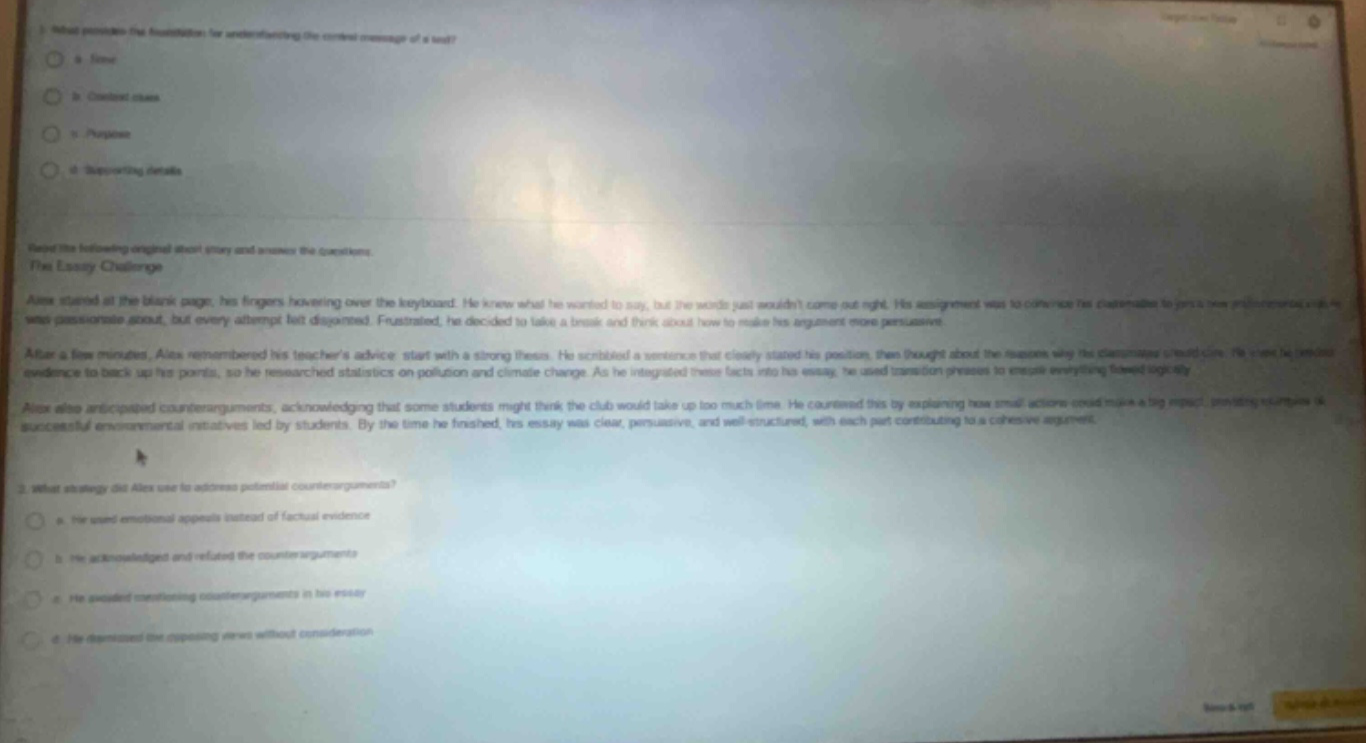
1. what provides the foundation for understanding the central message of a text?\n a. tone\n b. context clues\n c. purpose\n d. supporting details\n\nread the following original short story and answer the questions.\nthe essay challenge\nalex stared at the blank page, his fingers hovering over the keyboard. he knew what he wanted to say, but the words just wouldnt come out right. his assignment was to convince his classmates to join a new environmental - club he was passionate about, but every attempt left disappointed. frustrated, he decided to take a break and think about how to make his argument more persuasive.\nafter a few minutes, alex remembered his teachers advice: start with a strong thesis. he scribbled a sentence that clearly stated his position, then thought about the reasons why his classmates should care. he remembered he needed evidence to back up his points, so he researched statistics on pollution and climate change. as he integrated these facts into his essay, he used transition phrases to ensure everything flowed logically.\nalex also anticipated counter - arguments, acknowledging that some students might think the club would take up too much time. he countered this by explaining how small actions could make a big impact, pointing to numerous successful environmental initiatives led by students. by the time he finished, his essay was clear, persuasive, and well - structured, with each part contributing to a cohesive argument.\n2. what strategy did alex use to address potential counter - arguments?\n a. he used emotional appeals instead of factual evidence\n b. he acknowledged and refuted the counter - arguments\n c. he avoided mentioning counter - arguments in his essay\n d. he dismissed the opposing views without consideration
Answer
Brief Explanations:
- El propósito es lo que da contexto y orientación a un texto, permitiendo entender su mensaje central.
- Alex anticipó las counter - arguments, las reconoció y respondió a ellas, mostrando cómo pequeñas acciones pueden tener un gran impacto.
Answer:
- c. Propósito
- b. He acknowledged and refuted the counter - arguments